Choosing reliable suppliers for Carbon Steel Coil Cold Roll requires more than comparing advertised prices. Buyers must examine production capability, quality records, delivery performance, and technical support. A coil may look uniform under warehouse lighting, yet small thickness variations can affect stamping, bending, and welding.
Edwin Basson, Director General of worldsteel, has stated, “Steel is essential to modern life.” His observation explains why supplier selection deserves careful attention. Cold rolled carbon steel supports automotive panels, appliances, furniture, electrical cabinets, and precision components. Leading suppliers should provide consistent coil width, controlled gauge, clean surfaces, suitable mechanical properties, and complete mill test certificates. They should also explain their annealing, skin-pass, trimming, and inspection processes in clear technical language.
This guide examines top Carbon Steel Coil Cold Roll suppliers worldwide through a practical purchasing lens. It considers manufacturing scale, regional availability, export experience, certifications, product range, and customer responsiveness. Delivery matters. So does the final surface.
However, no global ranking is perfectly objective. Market conditions change, and a supplier strong in Europe may not serve a buyer in Southeast Asia efficiently. Minimum order quantities can also distort comparisons. A lower quoted price may hide longer lead times, stricter payment terms, or costly inland transport. That is easy to miss.
For that reason, each supplier should be checked against the buyer’s actual grade, thickness, coil weight, tolerances, packaging needs, and delivery schedule. The strongest choice is not always the largest producer. It is the supplier that performs reliably when specifications become demanding.
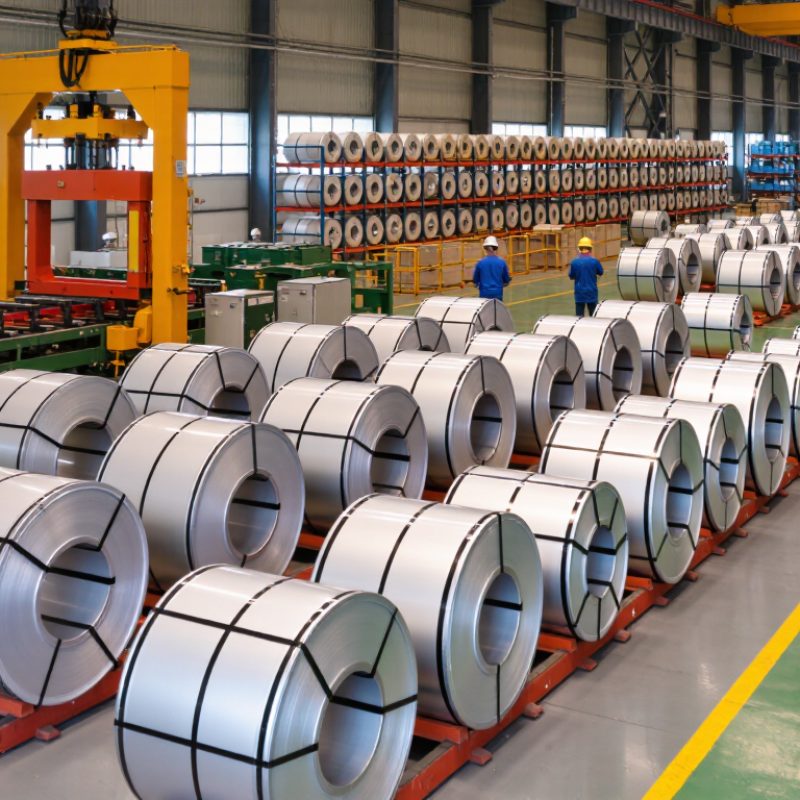
Cold rolled carbon steel coil is steel strip wound into a coil after being reduced in thickness at or near room temperature. The process usually begins with hot rolled steel, which is cleaned before further rolling. No heat is added during the main reduction step. The result is often a smoother surface and more precise thickness than hot rolled material. “Often” matters: the final condition also depends on the steel grade and processing route.
Look closely at a sheet under workshop lighting. Its surface may appear even, with fewer visible scale marks, though minor variations can still occur. Cold rolling also work-hardens the steel, increasing strength and hardness while reducing some formability. Annealing can restore ductility, so buyers should check whether a coil is supplied in an annealed or full-hard condition.
Small details, big consequences.
These coils are used in stamped parts, appliance housings, furniture components, and other formed products. Their consistent dimensions can help maintain production settings, but they do not guarantee trouble-free forming. Tool design, lubrication, and material direction still matter.
I would not treat “cold rolled” as a complete specification; thickness tolerance, surface requirements, edge condition, and mechanical properties should be stated clearly. The steel is not inherently corrosion-resistant, either, so exposed parts may need suitable protection.
Top Cold Rolled Carbon Steel Coil Suppliers Worldwide
Major Production Regions and Global Supply Market
Cold rolled carbon steel coil supply is concentrated in several industrial regions. East Asia remains a major production center, supported by integrated mills, deep ports, and efficient processing networks. Large facilities can provide stable thickness, smooth surfaces, and controlled coil weights for automotive, appliance, and machinery applications. However, domestic demand can quickly reduce export availability. That matters.
Europe supplies high-specification coils for demanding manufacturing sectors. Its producers often emphasize tight gauge tolerance, surface quality, and documented production controls. North America has strong regional supply, with distribution centers located near automotive and construction markets. Shorter inland transport can reduce delivery risks, even when base prices appear higher.
South Asia and nearby Middle Eastern markets are expanding their production and export roles. Their advantages may include competitive conversion costs and access to growing regional demand. Global buyers should compare more than price. Check mill test certificates, yield strength, tensile strength, coil width, packaging, and humidity protection. Port congestion and energy costs can change a quotation within weeks. A supplier’s published capacity may also exceed its practical export volume, so recent shipment records deserve careful review. This is an area where procurement teams can still make wrong assumptions. Sampling, third-party inspection, and clear claims procedures add useful protection.
Leading cold rolled carbon steel coil suppliers worldwide are judged by consistency, not promises. Experienced buyers inspect surface finish, width tolerance, thickness control, and edge condition before signing contracts. A capable supplier provides clear mill test certificates, heat numbers, and traceable production records. These details help engineers match coils with stamping, bending, or appliance applications. Ask for samples. Small differences matter.
Reliable suppliers explain steel grades, yield strength, tensile strength, elongation, and oiling options in practical terms. They also confirm packing methods, coil weight, inner diameter, and moisture protection for ocean transport. Independent audits can reveal whether laboratory results match production practice. Regional stock can shorten delivery, while large mills may support stable volume. Neither option is automatically better.
A useful evaluation includes response time, complaint handling, replacement procedures, and technical support after shipment. Ask how the supplier manages nonconforming coils. Their answer shows maturity. Price alone is a weak guide. A lower quote may hide tighter payment terms, longer transit, or inconsistent flatness. Even leading suppliers can make mistakes, so written specifications and incoming inspection remain necessary. I would review performance over several orders, not one successful delivery.
Regional crude steel production is used as an objective indicator of the upstream supply base for cold rolled carbon steel coils. Asia and Oceania represented the largest production region in 2023, followed by the European Union, North America, and other major steel-producing regions. Data source: World Steel Association, 2023 regional crude steel production statistics.
Cold rolled carbon steel coil suppliers are judged by more than price and delivery speed. Manufacturing discipline matters at every stage, from pickling and tandem rolling to annealing and skin passing. The World Steel Association reported 1.89 billion tonnes of crude steel production in 2023. That scale makes traceability essential, especially when coils move across several continents.
Common grades include ASTM A1008 commercial quality, ASTM A1008 drawing quality, EN 10130 DC01, and JIS G3141 SPCC. Each grade controls chemistry, strength, elongation, and surface performance differently. A supplier should provide heat numbers, mill test certificates, dimensional records, and coating or oiling details. ISO 9001 remains a useful quality framework; the ISO Survey 2022 recorded more than 1.2 million certified sites worldwide. Certification helps, but it is not proof of perfect material.
Quality checks should include thickness mapping, tensile testing, hardness measurement, surface inspection, and coil shape evaluation. A 1,250-millimeter coil with uneven edges can create costly feeding problems in stamping lines. Buyers should also verify yield strength against the agreed standard, not only against a supplier’s internal range. Small gaps matter. In practice, packaging often receives less attention than chemistry, yet moisture damage can ruin clean surfaces before arrival. Supplier audits, retained samples, and independent laboratory testing add confidence. Still, no certificate replaces inspection. Mistakes happen, and specifications sometimes remain too vague.
Choosing a reliable cold rolled carbon steel coil supplier requires more than comparing prices. A polished website is not proof of production capability. Check the supplier’s experience with your required grade, thickness, width, and surface finish. Ask for recent mill test certificates, chemical analysis, mechanical results, and batch identification. The documents should match the physical coil.
Traceability matters. Each coil should carry clear markings, weight details, production dates, and inspection records. Request photos of edge quality, packaging, and storage conditions. Rust stains, damaged wrapping, or uneven edges may reveal weak handling practices. A responsible supplier should explain how coils are protected during storage and transport.
Communication also deserves close attention. Can the technical team answer questions about yield strength, flatness, tolerances, and slitting accuracy? Vague replies often create costly problems later.
Request a sample or a small trial order when practical. Compare the delivered material with the agreed specifications, not only the quotation.
Independent inspections can strengthen confidence, especially for large orders. Review the supplier’s quality management system and production capacity. However, certificates alone are imperfect evidence. I have seen well-presented documents hide slow responses and inconsistent delivery. Payment terms, lead times, export experience, and corrective-action procedures should be discussed in writing. A dependable supplier admits limitations and records changes instead of making promises it cannot verify.
Check surface finish, width tolerance, thickness control, edge condition, and delivery performance. Price alone is weak evidence.
Request mill test certificates, heat numbers, dimensional records, and traceable production details. Paperwork helps, but it can still contain errors.
Review yield strength, tensile strength, elongation, hardness, and flatness. These values should match the agreed specification.
Use thickness mapping, tensile testing, hardness checks, surface inspection, and coil shape evaluation. Small differences can disrupt production.
Moisture can stain clean surfaces and create handling damage. Confirm wrapping, drainage protection, coil weight, and inner diameter.
Not automatically. Large mills may support stable volume, while regional stock can shorten delivery. The better choice depends on your needs.
Ask for samples, conduct an audit, and review several orders. One successful shipment proves very little.
Ask about complaints, replacement procedures, response times, and technical support. Their answer often reveals operational maturity.
Certificates support confidence, but they do not replace inspection. Specs may be vague, and even capable suppliers make mistakes.
Cold rolled carbon steel coils are flat steel products processed at room temperature to achieve a smooth surface, accurate dimensions, improved strength, and consistent thickness. The Carbon Steel Coil Cold Roll market serves industries such as automotive manufacturing, construction, appliances, machinery, and general fabrication. Major production regions are supported by established steelmaking capacity, advanced rolling technology, reliable logistics, and strong quality-control systems, creating a competitive global supply network.
Leading suppliers are typically evaluated by their production capability, technical expertise, delivery performance, and ability to meet international standards. Buyers should review available grades, thickness and width ranges, surface finishes, chemical composition, mechanical properties, certifications, packaging, and inspection procedures. A reliable supplier should provide clear documentation, stable quality, responsive communication, flexible order support, and transparent pricing. Careful comparison of manufacturing standards, product performance, lead times, and after-sales service can help customers select a dependable partner for long-term cold rolled carbon steel coil requirements.

Tezhong