China’s steel industry supplies a wide range of materials for automotive, construction, appliances, and machinery markets. Among them, Carbon Steel Cold Rolled Coil remains essential for applications requiring smooth surfaces, accurate dimensions, and reliable forming performance. Choosing the right supplier, however, involves more than comparing prices.
This guide introduces ten notable Chinese suppliers in the cold rolled coil sector. It considers production capacity, material grades, thickness ranges, surface finishes, and quality control practices. Export experience also matters. A dependable supplier should provide clear mill test certificates, consistent chemical data, and practical packaging for long-distance transport. Details such as edge condition, coil weight, inner diameter, and rust prevention can affect production results.
Small details matter.
The selection also reflects customer experience, factory capability, and available technical support. Some companies operate large integrated mills, while others focus on processing, customization, or international distribution. Their strengths may differ by order volume, delivery region, and required specifications. Buyers should verify certifications, inspection procedures, and current production conditions before signing a contract. Online information can become outdated, and a polished website does not prove stable quality.
This overview is intended as a practical starting point, not a final purchasing decision. It highlights suppliers worthy of further evaluation and encourages direct communication with each company. Request samples when surface quality is critical. Confirm tolerances before production. A careful comparison can reduce shipment delays, material waste, and unexpected rework.
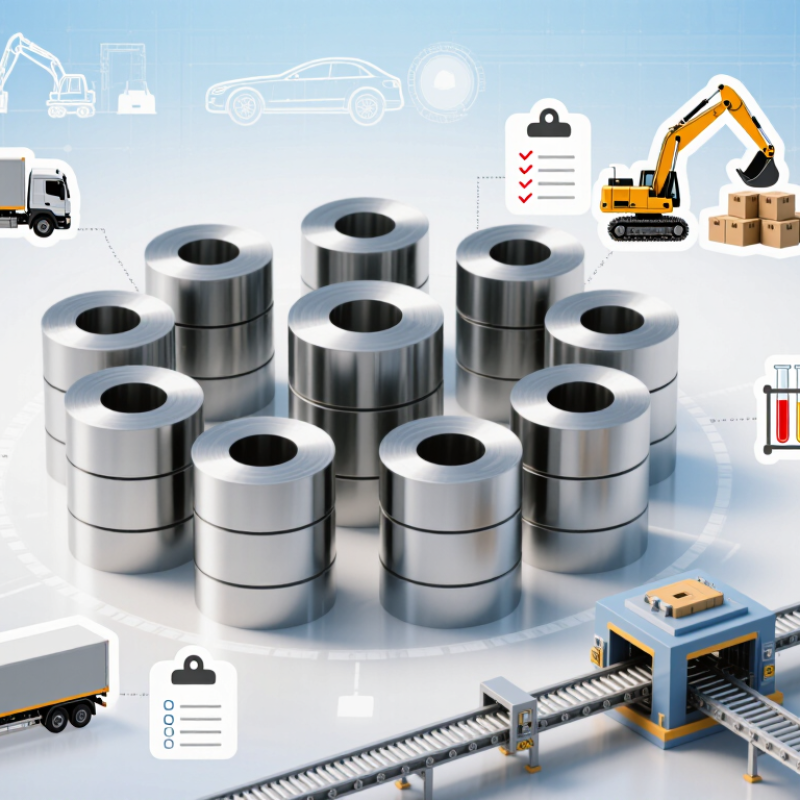
Carbon steel cold rolled coil is steel processed after hot rolling, pickling, and cleaning.
It passes through rollers at near-room temperature. This reduces thickness and improves dimensional accuracy. The finished strip is wound into a large coil for transport and fabrication.
Most grades contain relatively low carbon, which supports forming, welding, and consistent production. Annealing can restore ductility after heavy rolling. Skin passing then improves flatness, surface appearance, and shape control.
Depending on the grade, the surface may be bright, lightly oiled, or prepared for painting. It is not stainless steel. Rust protection still matters.
In practical sourcing, I check thickness tolerance, width, flatness, coil weight, and surface defects. Small scratches can become visible after stamping or coating. Mechanical test reports should confirm yield strength, tensile strength, and elongation. Chemical analysis also helps verify the specified grade.
A smooth surface does not guarantee good forming performance. That assumption is easy to make, but incomplete. Excessive hardness may cause cracking around tight bends.
Storage conditions matter too; moisture trapped between laps can create staining. For suppliers in China, clear inspection standards and traceable mill documentation make comparisons more reliable.
When evaluating Chinese carbon steel cold rolled coil suppliers, production scale is only the starting point. The World Steel Association reported that China produced about 1,019 million tonnes of crude steel in 2023. Large output does not guarantee stable cold rolled quality. Buyers should verify monthly capacity, rolling-mill location, equipment age, and actual export experience. Request recent mill test certificates, not only sample documents. Check chemical composition, yield strength, tensile strength, elongation, thickness tolerance, and surface finish against GB/T 708, EN 10130, or ASTM A1008 requirements.
Traceability deserves close attention. Each coil should carry a heat number, production date, grade, dimensions, and weight. These details must match packing lists and test reports. OECD Steel Outlook 2024 continues to highlight global capacity pressure and uneven market conditions. That makes financial stability and delivery discipline practical evaluation points. Ask for shipment records, inspection procedures, complaint-response times, and independent inspection access. A supplier that resists verification creates avoidable risk.
Surface quality is visible at the warehouse. Look for edge cracks, rust stains, telescoping, coil breaks, and uneven oiling. Packaging should protect coils during humid sea transport. I would also compare actual width and gauge measurements from three coils, not one. That costs little. A low quotation can hide higher rejection, rework, and storage costs. No evaluation is perfect; even a clean audit may miss a process change after the contract is signed. Regular third-party inspection remains useful.
China’s top 10 carbon steel cold rolled coil suppliers are often evaluated by quality consistency, production capacity, and export experience. A reliable supplier should provide clear details on grade, thickness, width, surface finish, and coil weight. These specifications affect stamping, bending, welding, and painting performance.
In practical purchasing, I check the mill test certificate before comparing prices. I also request samples around 0.8 to 1.2 millimeters thick. The surface should look even under direct light, without rust spots, deep scratches, or visible edge cracks. Tight thickness tolerance matters. Small variations can create feeding problems on automated lines.
Packaging deserves attention too. Strong steel straps, moisture-resistant paper, and protected coil edges reduce damage during sea transport.
The top 10 list should not be treated as permanent. Capacity, lead times, export service, and inspection records can change. Public information is also incomplete. That is a weakness buyers should acknowledge. A supplier may have modern equipment but limited experience with a specific grade. Another may offer attractive pricing but weaker documentation. I prefer suppliers that explain nonconformity procedures, provide traceable batch numbers, and accept third-party inspection. Quiet details matter. Ask about oiling levels, inner diameter, loading photos, and replacement terms before placing a large order.
China’s leading carbon steel cold rolled coil suppliers usually offer grades for stamping, forming, and general fabrication. Common choices include low-carbon commercial quality, deep-drawing quality, extra-deep-drawing steel, and structural grades. Buyers may reference GB/T, ASTM, EN, or JIS standards. The selected standard should match the final application, not only the purchasing region.
A reliable supplier provides heat numbers, mill test certificates, dimensional records, and surface inspection data. Typical controls include thickness tolerance, width accuracy, flatness, yield strength, tensile strength, and elongation. Surface finishes may be bright, dull, or lightly oiled for temporary rust protection. Coil edges can be mill edge or slit edge. Small differences matter.
Customization often covers thickness, width, coil weight, inner diameter, packaging, annealing condition, and skin-pass treatment. Some suppliers also support trial coils before regular production. This reduces risk for stamping lines. Yet specifications are sometimes copied without practical review. That is a weakness. A grade suitable for bending may still fail during severe drawing. Ask for forming samples, inspection frequency, and realistic tolerance ranges. Third-party inspection can add confidence, especially when delivery schedules are tight. Always verify whether the quoted standard covers chemical composition, mechanical properties, and surface requirements together.
China Top 10 Carbon Steel Cold Rolled Coil Suppliers
How to Select the Right Supplier for Your Needs
Selecting a carbon steel cold rolled coil supplier in China requires more than comparing a low quotation. In production, I would check the mill route, steel grade, thickness tolerance, surface finish, and coil weight against the drawing. Ask for recent mill test certificates, not only a sample PDF. Verify chemical composition, yield strength, tensile strength, elongation, and dimensional results. A supplier that explains its inspection process clearly is easier to trust when problems appear.
Production capacity matters, but usable capacity matters more. Request monthly output for your grade, rolling schedule, and typical lead time during peak seasons. Confirm whether coils are slit, oiled, edge-trimmed, or packed for your handling requirements. A trial order can reveal edge damage, telescoping, rust spots, and inconsistent labeling. Measure incoming coils with calibrated tools. Small deviations become expensive after stamping.
Also assess traceability and communication. Each coil should link to a heat number, inspection record, packing list, and shipping mark. Clarify tolerances, claims procedures, replacement terms, and responsibility for transport damage in writing. Auditing a factory, remotely or in person, can expose gaps between sales promises and shop-floor practice. I would not choose solely from a top-ten list. One weakness remains: no supplier can remove every risk. Recheck assumptions after the first shipment, especially when production data disagrees with the original specification.
It is steel processed after hot rolling, pickling, and cleaning. Rollers reduce its thickness near room temperature. The strip is then wound into a coil.
Cold rolling improves thickness accuracy, flatness, and surface appearance. It can also increase hardness. Annealing may restore ductility after heavy rolling.
No, it is not stainless steel. Rust protection remains necessary. Light oil, dry storage, and suitable packaging help reduce corrosion.
Check grade, thickness, width, flatness, coil weight, surface finish, and inner diameter. Small errors can affect stamping, bending, or automated feeding.
Request mechanical test reports and chemical analysis. These should confirm yield strength, tensile strength, elongation, and the specified grade.
Inspect for rust spots, deep scratches, edge cracks, stains, and uneven surfaces. Minor marks may become obvious after stamping or coating.
Use strong steel straps, moisture-resistant paper, and protected coil edges. Loading photographs provide useful evidence. Packaging can still fail, so inspect it carefully.
Compare documentation, capacity, lead time, inspection records, and experience with the required grade. Request samples between 0.8 and 1.2 millimeters thick.
No. Capacity, export service, prices, and lead times can change. Public information is incomplete. A modern factory may still lack experience with one grade.
Ask about oiling levels, batch traceability, nonconformity procedures, replacement terms, and third-party inspection. Quiet details matter. I may still overlook something.
This article provides a practical overview of Carbon Steel Cold Rolled Coil, explaining its manufacturing characteristics, surface quality, dimensional accuracy, strength, and common applications in industries such as automotive, appliances, construction, and general manufacturing. It also introduces the key factors buyers should consider when evaluating Chinese suppliers, including production capacity, quality control systems, technical expertise, delivery reliability, export experience, and after-sales support.
The guide presents a structured comparison of China’s top 10 Carbon Steel Cold Rolled Coil suppliers without focusing on brand promotion. It discusses commonly requested product grades, international and domestic standards, thickness and width ranges, surface finishes, edge conditions, packaging, and customization options. Finally, it offers practical advice for selecting the most suitable supplier by matching material specifications, certifications, order volume, budget, lead time, inspection requirements, and long-term cooperation goals.

Tezhong