Choosing the right Carbon Steel Roll Coil is rarely a simple price comparison. Global buyers must examine grade, thickness, width, coil weight, surface condition, and delivery reliability. A bright, clean coil may suit exposed panels, while a darker hot-rolled surface may fit welded frames or heavy machinery. Small differences can affect forming, cutting, painting, and total production cost.
Peter F. Marcus, a respected steel-market economist, offers a useful warning: “Steel markets are local, even when trade is global.” His observation matters when buyers compare mills, export regions, certifications, and logistics. A coil produced to the same nominal grade may still behave differently during stamping. Mill practice, cooling control, edge quality, and storage conditions can leave visible or hidden differences.
This guide examines ten Carbon Steel Roll Coil types commonly considered by international purchasers. It covers hot-rolled, pickled-and-oiled, cold-rolled, galvanized, structural, deep-drawing, and higher-strength options. Each type has a practical place. None is perfect for every application.
Buyers should review the mill test certificate carefully. Check carbon content, yield strength, tensile strength, elongation, thickness tolerance, and coil dimensions. Confirm packaging details, rust protection, and traceability before shipment. A low quotation can become expensive after slitting loss, surface rejection, or forming cracks. That lesson is easy to overlook.
The following outline is designed for clearer decisions. It connects material characteristics with real purchasing conditions. Some recommendations remain conditional. Steel selection always depends on use, processing equipment, and delivery requirements.
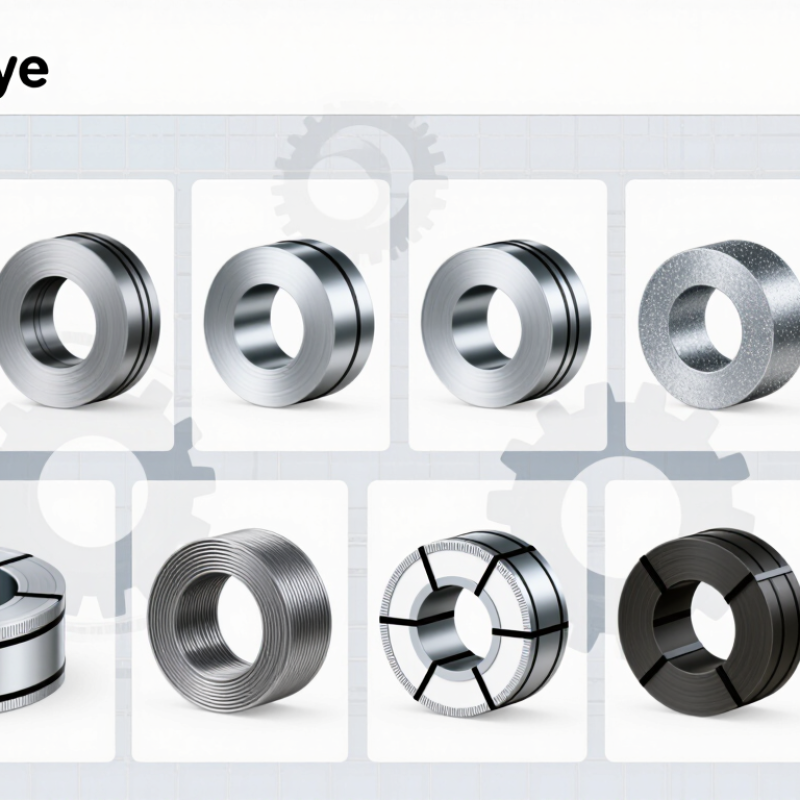
Carbon steel roll coils are long, continuous steel strips wound around a core for storage and transport. Their main ingredients are iron, carbon, manganese, and small controlled amounts of other elements. Carbon content influences strength, hardness, weldability, and forming performance. In practice, coil names often overlap, so buyers should check the mill certificate instead of trusting a short product label.
The coil structure is simple but highly controlled. A steel substrate carries the load, while its thickness, width, inner diameter, outer diameter, and edge condition affect processing. Hot-rolled coils usually show a dark mill scale and suit heavier fabrication. Cold-rolled coils have tighter dimensions and a smoother surface. Galvanized, pickled, and annealed variations add surface protection or improve forming behavior. These distinctions matter.
Small details create large costs. A rough edge may damage a slitting blade. Excessive coil weight can exceed a line’s lifting capacity. Moisture trapped during storage may cause rust stains, even when the steel grade is suitable. No classification is perfect. Buyers should match the coil to the real process, not only the final product.
Common applications include structural beams, roofing panels, automotive parts, agricultural equipment, machinery frames, pipes, tanks, brackets, containers, and general fabrication. Hot-rolled grades tolerate demanding shaping and welding. Cold-rolled grades support visible panels and precise components. For reliable purchasing, compare carbon content, yield strength, tensile strength, elongation, surface condition, dimensional tolerance, and inspection records. A practical trial coil can reveal problems that paperwork misses.
| Rank | Carbon Steel Roll Coil Type | Manufacturing Route | Typical Grades and Standards | Typical Thickness | Typical Width | Surface or Layer Structure | Main Applications |
|---|---|---|---|---|---|---|---|
| 1 | Hot-Rolled Commercial-Quality Coil | Continuously cast slab reheated and rolled above the steel recrystallization temperature. | ASTM A1011 CS Type B EN 10111 DD11 |
Approximately 1.2–25 mm | Approximately 800–2,000 mm | Ferritic or ferrite-pearlite carbon steel matrix with a characteristic hot-rolled scale surface. | General fabrication, brackets, frames, agricultural equipment, storage systems, and non-critical structural parts. |
| 2 | Hot-Rolled Structural Coil | Hot rolling followed by controlled cooling to achieve specified yield and tensile properties. | ASTM A1011 SS Grade 36 EN 10025-2 S235JR |
Approximately 1.5–12.7 mm | Approximately 900–2,000 mm | Low-carbon structural steel with a hot-rolled scale; strength is defined by the applicable structural grade. | Structural frames, construction components, transportation equipment, machinery bases, and general engineering. |
| 3 | Pickled and Oiled Hot-Rolled Coil | Hot-rolled coil is chemically descaled in hydrochloric acid and lightly oiled for temporary corrosion protection. | ASTM A1011 CS EN 10111 DD11 or DD12 |
Approximately 1.5–8 mm | Approximately 900–1,800 mm | Clean metallic surface after scale removal, with a thin protective oil film; suitable for subsequent forming or coating. | Automotive parts, tubes, welded components, pressed parts, fuel tanks, and fabricated machinery. |
| 4 | Cold-Rolled Commercial-Quality Coil | Pickled hot-rolled strip is cold reduced, annealed, and commonly skin-passed for improved flatness and surface finish. | ASTM A1008 CS Type B EN 10130 DC01 |
Approximately 0.30–3.0 mm | Approximately 800–1,850 mm | Low-carbon steel substrate with a smooth, relatively uniform bright surface and controlled dimensional tolerances. | Electrical cabinets, furniture, office equipment, light fabrication, appliance components, and general stamping. |
| 5 | Deep-Drawing Quality Cold-Rolled Coil | Cold reduction and batch or continuous annealing are controlled to improve ductility and forming performance. | ASTM A1008 DDS EN 10130 DC03 |
Approximately 0.40–2.0 mm | Approximately 800–1,850 mm | Low-carbon, highly ductile ferritic structure with a surface suitable for moderate-to-severe forming. | Automotive body parts, oil pans, housings, appliance panels, containers, and formed sheet-metal products. |
| 6 | Extra-Deep-Drawing Quality Coil | Specially controlled low-carbon steelmaking, cold rolling, and annealing provide very high formability. | ASTM A1008 EDDS EN 10130 DC04 or DC05 |
Approximately 0.50–1.5 mm | Approximately 900–1,850 mm | Very low-carbon, highly recrystallized ferritic structure designed to minimize strain aging and forming defects. | Complex automotive panels, deep-drawn sinks, appliance shells, irregular housings, and demanding stamped components. |
| 7 | Hot-Dip Galvanized Carbon Steel Coil | Cold-rolled or hot-rolled steel strip passes through a molten zinc bath and is then cooled and coated. | ASTM A653 CS or SS EN 10346 DX51D+Z |
Approximately 0.25–3.2 mm | Approximately 800–1,850 mm | Carbon steel substrate plus a metallurgically bonded zinc coating; common total coating masses are about 60–275 g/m² on both sides. | Roofing and siding, HVAC ducts, automotive components, fencing, solar mounting parts, construction framing, and appliances. |
| 8 | Galvannealed Carbon Steel Coil | Steel is hot-dip galvanized and then heat-treated so that iron diffuses into the zinc coating. | ASTM A653 galvannealed grades EN 10346 DX51D+ZF |
Approximately 0.40–2.5 mm | Approximately 900–1,850 mm | Iron-zinc alloy coating with a matte, paint-friendly surface; typical coating masses are about 30–140 g/m² on both sides. | Automotive body structures, welded assemblies, painted panels, brackets, electrical enclosures, and construction components. |
| 9 | Electro-Galvanized Carbon Steel Coil | Cold-rolled steel strip receives a controlled zinc coating through an electrolytic process. | ASTM A879 EN 10152 DC01+ZE |
Approximately 0.40–2.0 mm | Approximately 800–1,850 mm | Uniform, thin zinc layers on one or both sides, commonly about 20–100 g/m² total coating mass, with a smooth surface. | Interior automotive panels, electrical products, appliances, precision components, and parts requiring a smooth painted finish. |
| 10 | Prepainted Carbon Steel Coil | Usually galvanized or galvannealed steel is cleaned, chemically treated, primed, and factory-coated with an organic paint system. | ASTM A755/A755M EN 10169 coated steel products |
Approximately 0.25–1.5 mm | Approximately 800–1,600 mm | Carbon steel substrate, metallic protective coating, pretreatment, primer, and topcoat; total organic coating commonly about 15–35 μm. | Building panels, roofing, wall cladding, garage doors, appliance housings, partitions, and prefabricated structures. |
| Technical note: Carbon steel generally refers to iron-carbon steel in which carbon is the principal alloying addition and other alloying elements remain within controlled limits. The dimensional ranges and coating masses shown are typical commercial ranges, not universal limits; exact availability depends on the applicable standard, grade, mill capability, surface finish, edge condition, and buyer specification. | |||||||
It is a continuous steel strip wound around a core for storage and transport. Iron, carbon, manganese, and controlled elements form its composition. Carbon content affects strength, hardness, welding, and forming.
Hot-rolled coils usually have dark mill scale and suit heavy fabrication. Cold-rolled coils offer smoother surfaces and tighter dimensions. The better choice depends on the process, not appearance alone.
Confirm grade, thickness, width, coil weight, inner diameter, outer diameter, edge condition, and forming method. Also check yield strength, tensile strength, elongation, surface condition, and dimensional tolerances. Small mismatches can disrupt production.
Request a mill test certificate with chemistry, mechanical properties, heat number, and production standard. Match those details with coil tags and shipping records. Paperwork helps, but it cannot reveal every internal defect.
Check thickness at several points, including near the edges. Look for dents, rust stains, edge cracks, telescoping, and loose winding. Inspect wrapping for tears or moisture marks. Photos help, but direct inspection is stronger.
Compare coil weight with the lifting capacity of the processing line. Store coils in dry conditions and prevent trapped moisture. Moisture can leave rust stains, even on a suitable grade. This risk is easy to underestimate.
Hot-rolled coils fit structural beams, machinery frames, pipes, tanks, and general fabrication. Cold-rolled coils suit visible panels and precise components. Coated, galvanized, pickled, or annealed coils support different surface or forming needs. Confirm the actual process before choosing.
Not always. Include freight, cutting loss, storage, inspection, and rejected material in the real cost. A practical trial coil can expose problems that documents miss. My review checklist is still imperfect; testing should challenge my assumptions.
This guide explains the fundamentals of Carbon Steel Roll Coil, including its composition, layered structure, manufacturing process, and major applications in construction, automotive production, machinery, energy equipment, and general fabrication. It introduces ten widely used types, such as hot-rolled, cold-rolled, galvanized, pickled and oiled, high-strength low-alloy, structural, deep-drawing, medium-carbon, low-carbon, and weather-resistant coils. Each type is evaluated according to its steel grade, production method, thickness range, tensile strength, surface condition, weldability, and formability.
For global buyers, selecting the right roll coil requires matching material performance with the intended application, processing method, climate, and delivery requirements. The article also outlines practical inspection points, including dimensional accuracy, surface quality, coil weight, mechanical test results, chemical composition, packaging, and traceability documents. By comparing strength, finish, thickness, and forming behavior before purchase, buyers can reduce processing risks, improve product consistency, and source a Carbon Steel Roll Coil that meets technical specifications and applicable quality requirements.

 Tezhong