How to Source Low Carbon Steel Coils and Strips in 2026?

Time:2026-10-14 Author:Aria
0%

Sourcing Steel Coils Low Carbon Strips in 2026 requires more than comparing prices, thicknesses, and delivery dates. Buyers must examine emissions data, recycled content, production routes, and traceability. The International Energy Agency reports that steelmaking produces roughly 7% of global energy-related emissions. Its Iron and Steel Technology Roadmap also identifies efficiency, scrap use, hydrogen, and carbon capture as major decarbonisation pathways.

Edwin Basson, Director General of worldsteel, has stated, “There is no single solution to decarbonising the steel industry.” That warning matters during supplier evaluation. Electric arc furnace material may offer lower emissions, but its footprint depends on electricity sources and scrap quality. Basic oxygen furnace steel can still perform well when producers use verified improvements and transparent reporting. The answer is not always obvious.

A dependable sourcing process should request mill test certificates, product carbon footprints, environmental product declarations, and chain-of-custody evidence. Buyers should also confirm coil width, gauge tolerance, surface finish, yield strength, and slitting accuracy. A green claim without boundary definitions is weak evidence. Ask whether emissions cover Scope 1, Scope 2, transport, or upstream inputs.

ResponsibleSteel guidance and worldsteel’s sustainability indicators can support supplier screening. Yet documentation can remain inconsistent across regions. That is the uncomfortable part. A cheaper coil may become expensive after rework, delayed customs clearance, or failed customer audits. In 2026, procurement teams should compare verified carbon intensity beside mechanical performance, landed cost, and supply reliability. Lower carbon is valuable, but only when the steel remains usable, traceable, and commercially dependable.
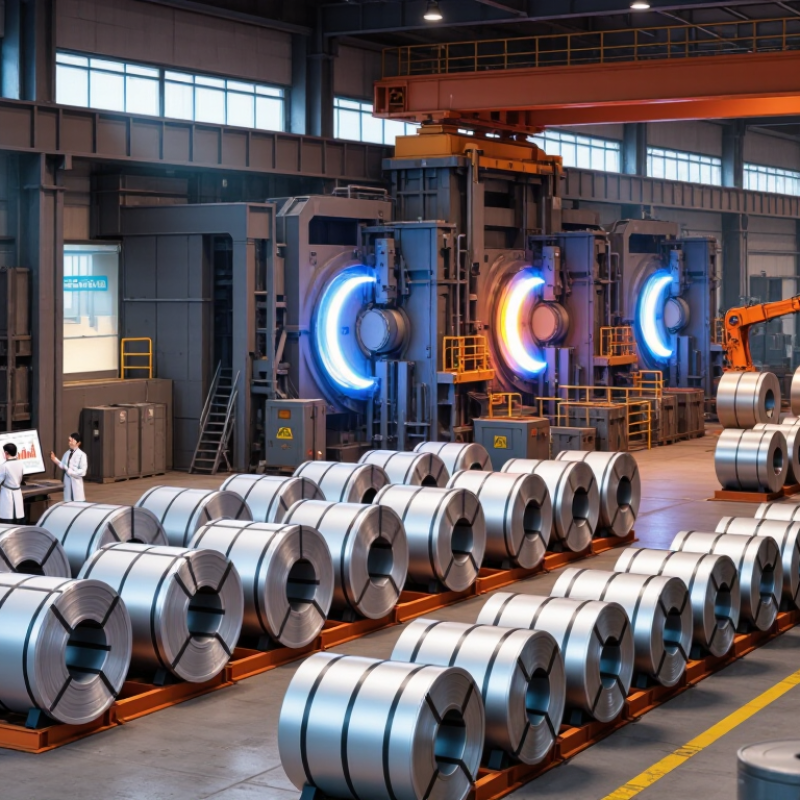
How to Source Low Carbon Steel Coils and Strips in 2026?

Defining Low Carbon Steel Coils and Strips for Industrial Use

How to Source Low Carbon Steel Coils and Strips in 2026?

Defining Low Carbon Steel Coils and Strips for Industrial Use

Low carbon steel usually contains up to about 0.25% carbon. Exact limits vary by specification and application. This steel is valued for easy forming, welding, and reliable surface preparation. Coils suit continuous processing, while strips support narrow components, stamped parts, and precision assemblies. No definition fits every plant perfectly.

In practice, buyers should check carbon content, yield strength, tensile strength, thickness tolerance, width tolerance, and surface condition. A coil for deep drawing needs different performance from one used for brackets. Mill test certificates should match the heat number and shipment documents. Ask for traceability from production through slitting. I have seen low-priced material create higher costs through edge cracks, unstable dimensions, and extra rework. The label alone is not enough.

Tips: Request sample data before placing a large order. Confirm whether the strip is slit, annealed, pickled, or coated. Compare actual tolerances, not only nominal sizes. Inspect packaging for moisture protection and secure coil handling. Also clarify delivery dates, because a technically suitable coil is useless when production stops. Be cautious with vague sustainability claims; request measured carbon information and supporting records.

How to Source Low Carbon Steel Coils and Strips in 2026?

Low carbon steel is commonly specified with carbon content below approximately 0.25%. The chart compares representative maximum carbon limits for widely used SAE low-carbon steel grades suitable for coil and strip applications.

When sourcing in 2026, confirm the applicable standard, thickness, width, surface condition, yield strength, tensile strength, dimensional tolerances, and mill test certificate. Lower-carbon grades generally provide improved formability and weldability, while the final specification should match the intended industrial process.

Reference basis: representative maximum carbon limits from SAE J403 chemical composition specifications; values may vary by product standard, heat analysis, and purchasing agreement.

Identifying Specifications, Grades, and Carbon Content Requirements

Sourcing low carbon steel coils and strips in 2026 starts with a precise carbon limit. “Low carbon” commonly means below 0.25% carbon by weight, but this term is not universal. State the required maximum in the purchase specification. The World Steel Association reported approximately 1.89 billion tonnes of crude steel production in 2023, showing the scale of this market. Large supply does not guarantee consistent chemistry.

Match the grade to the forming process. ASTM A36 often permits carbon up to 0.26%, depending on thickness and product form. EN 10130 DC01 commonly limits carbon to 0.12% for cold-rolled sheet. These values are not interchangeable. Ask suppliers to confirm the governing standard, thickness range, yield strength, tensile strength, elongation, surface finish, and dimensional tolerances. Request a heat number and a mill test certificate with every coil.

Carbon content affects weldability, bending, and surface performance. A strip intended for deep drawing may need lower carbon and tighter elongation control than a structural strip. The International Energy Agency estimates iron and steel production creates around 7% to 9% of global energy-related emissions, so traceable lower-carbon production data deserves attention. Ask for recycled content, production-route information, and product carbon intensity. Verify the calculation boundary. This part is often unclear. A practical sourcing error is accepting a familiar grade without checking thickness-specific chemistry. Independent testing can expose that weakness before stamping, welding, or slitting begins.

Evaluating Suppliers, Production Sources, and Quality Certifications

How to Source Low Carbon Steel Coils and Strips in 2026?

Supplier evaluation should begin with the production route, not the sales brochure. The World Steel Association reports that steel creates about 7–9% of global carbon dioxide emissions. Ask whether coils come from electric arc furnaces, direct reduced iron, or conventional blast furnaces. Request verified carbon intensity per tonne, energy sources, scrap content, and the mill’s production location. A low-carbon claim without calculation boundaries is weak evidence.

Tips: Check heat numbers, mill test certificates, and traceability records. Verify ISO 9001 for quality systems, ISO 14001 for environmental management, and ISO 50001 for energy management. An Environmental Product Declaration can provide clearer lifecycle information. ISO 14067-based carbon footprints are also useful. Third-party assurance matters.

Quality still decides whether a “green” coil performs well. Review yield strength, tensile strength, elongation, thickness tolerance, surface condition, and coil weight. Match these values with your forming, stamping, or slitting requirements. The International Energy Agency identifies near-zero emissions steel as a major pathway toward industrial decarbonisation by 2050. Yet certification does not guarantee stable delivery. In practice, I would approve a supplier only after checking sample coils, corrective-action records, and delivery history. Some documents look impressive. They may still hide inconsistent data.

Comparing Prices, Lead Times, Logistics, and Environmental Performance

In 2026, sourcing low carbon steel coils and strips requires more than comparing the lowest quotation. A reliable price review should separate base steel, processing, packaging, inland transport, and duties. Ask whether the quote uses EXW, FOB, or delivered terms. Otherwise, a cheap coil may become expensive after port handling and local delivery. Request mill test certificates, dimensional tolerances, coating details, and payment conditions before comparing suppliers.

Lead time deserves equal attention. A supplier may promise four weeks, but material testing, slitting, vessel schedules, and customs clearance can add delays. In practice, I allow a buffer for critical production orders. It is not always efficient. Holding extra inventory costs money, yet one missed delivery can stop a fabrication line. Confirm production capacity, minimum order quantities, holiday closures, and alternative transport routes in writing.

Environmental performance needs measurable evidence, not attractive wording. Request product carbon footprint data, electricity sources, recycled content, and the accounting boundary used. Two coils can show different emissions because one calculation includes transport while another excludes it. Look for current environmental product declarations or verified project data. Energy-saving claims still need checking. I have seen suppliers provide impressive figures without explaining the baseline, which makes fair comparison difficult. A practical scorecard can combine price, delivered lead time, logistics risk, emissions per tonne, and documentation quality. Keep the scoring transparent, and record assumptions before placing the order.

Verifying Samples, Contracts, Traceability, and 2026 Delivery Plans

How to Source Low Carbon Steel Coils and Strips in 2026?

Reliable sourcing starts with physical samples, not attractive quotations. Request samples from the proposed production route. Check thickness, width, edge condition, surface marks, and coil shape. Ask for chemistry results and mechanical test data. Compare them with your required grade and forming process. A sample can pass inspection but still hide inconsistent production. I have seen this happen after a supplier changed its melting schedule.

Your contract should define tolerances, coil weight, inner diameter, packaging, inspection rights, and rejection procedures. Include the required mill test certificate for every heat or batch. Traceability must connect each coil to its heat number, production date, test results, and packing record.

Photograph the label before shipment. Keep those records with purchase documents. Delivery planning for 2026 needs fixed production windows, booking deadlines, port options, and a realistic buffer for delays. Do not rely on a promised shipping week alone. It is often too optimistic.

Tips: Build a sample approval sheet with measurable limits. Confirm whether inspection occurs before loading or after arrival. Request monthly capacity updates during peak periods. Review one delivery simulation with the supplier. Include customs and documentation checks. Small gaps become expensive later. I still allow extra time, because forecasts are never perfect.

FAQS

What is low carbon steel, and why are coils and strips used?

Low carbon steel usually contains up to about 0.25% carbon. It forms and welds easily. Coils support continuous processing, while strips suit narrow parts and stamped components. Exact limits depend on the specification.

Which technical details should buyers confirm?

Check carbon content, yield strength, tensile strength, thickness, width, and surface condition. Also confirm edge quality and dimensional tolerances. The label is insufficient.

How can buyers compare quotations fairly?

Separate steel, processing, packaging, inland transport, and duties. Confirm whether pricing uses EXW, FOB, or delivered terms. A cheap coil may become costly after handling and local delivery.

What should buyers ask about delivery timing?

Confirm production time, testing, slitting, vessel schedules, and customs preparation. Ask about minimum quantities and holiday closures. Keep a buffer for critical orders. Promised dates can be optimistic.

How should environmental performance be checked?

Request product carbon footprint data, recycled content, electricity sources, and accounting boundaries. Check whether transport emissions are included. Attractive wording is not evidence.

Why are physical samples important?

Samples reveal thickness, width, edge condition, surface marks, and coil shape. Compare chemistry and mechanical results with the forming process. One sample may not represent future production. That deserves skepticism.

What should a purchasing contract include?

Define tolerances, coil weight, inner diameter, packaging, inspection rights, and rejection procedures. Require test certificates for every heat or batch. Specify whether inspection happens before loading or after arrival.

How does traceability reduce sourcing risk?

Each coil should connect to its heat number, production date, test results, and packing record. Photograph labels before shipment. Keep these records with purchase documents. Small gaps become expensive later.

How can delivery plans remain practical in 2026?

Set production windows, booking deadlines, port options, and alternative transport routes. Review a delivery simulation with the supplier. Add customs and documentation checks. I still allow extra time. Forecasts are never perfect.

Conclusion

Sourcing low carbon steel coils and strips in 2026 requires a clear understanding of how these materials will perform in industrial applications. Buyers should define required dimensions, surface condition, mechanical properties, tolerances, and carbon content before requesting quotations. The selected grade must match fabrication, forming, welding, and service requirements, while documentation should confirm chemical composition and production consistency. The term Steel Coils Low Carbon Strips should be used carefully in purchasing specifications to avoid confusion between coil formats, slit strips, and finished sizes.

A reliable sourcing process should evaluate production capacity, quality certifications, inspection procedures, traceability systems, and the supplier’s ability to provide consistent batches. Total cost should include material price, processing, packaging, freight, duties, lead time, and potential environmental reporting requirements. Before signing a contract, buyers should verify samples, approve technical standards, define inspection and claim procedures, and establish delivery milestones for 2026. Clear records covering heat numbers, test reports, origin, and shipment status can reduce risk and support responsible, predictable procurement.

Aria

Aria

Aria is a dedicated marketing professional with a deep passion for innovative strategies and a keen understanding of our company's product offerings. With a wealth of experience in the industry, Aria excels at crafting engaging content that highlights the unique features and benefits of our......