Carbon Steel Coil Cold Roll has become a popular choice in various industries due to its unique properties. This process involves rolling steel at room temperature, resulting in a thinner, stronger material. The benefits of Carbon Steel Coil Cold Roll are numerous, ranging from enhanced durability to improved surface finish.
In construction and manufacturing, Carbon Steel Coil Cold Roll is often preferred for its ability to withstand stress. Its consistent thickness makes it ideal for precision applications. Moreover, it can be easily manipulated for different designs. However, it is essential to note that while Carbon Steel Coil Cold Roll offers many advantages, it also has its limitations. Proper storage and handling are crucial to prevent surface rust or damage.
Ultimately, understanding both the strengths and the potential drawbacks of Carbon Steel Coil Cold Roll can guide better decision-making. This insight is vital for those looking to leverage its properties in their projects. Taking the time to explore its characteristics can lead to more informed choices.
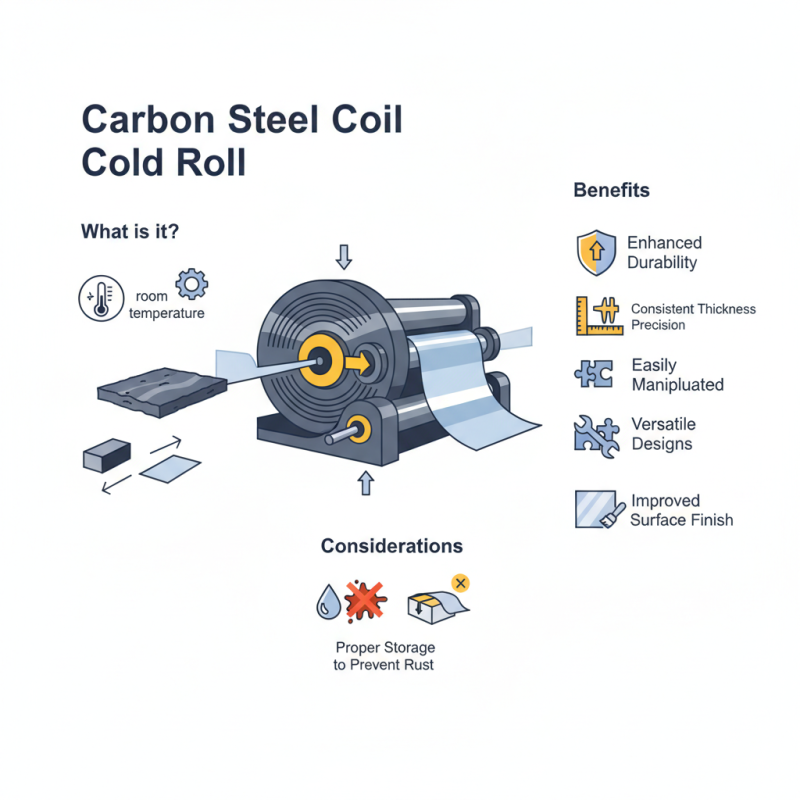
Carbon steel coil cold roll refers to the process of rolling carbon steel at room temperature. This method enhances various properties of the steel, making it an essential material in several industries. Cold rolling produces sheets that exhibit superior dimensional accuracy and improved surface finish. According to the World Steel Association, over 1.7 billion tons of steel were produced globally in 2022, highlighting the significance of carbon steel in manufacturing.
The benefits of carbon steel coil cold roll are numerous. It allows for better tensile strength and hardness. Cold-rolled steel has finer grain structure, leading to improved durability. Additionally, this type of steel is often more cost-effective. A report by the American Iron and Steel Institute noted that cold-rolled steel requires less processing, reducing energy consumption by approximately 15%.
Tip: Always consider the thickness of the steel when selecting materials for your project. If you're unsure, consult with industry experts to ensure you choose the right gauge for your needs.
However, while cold rolling offers clear advantages, it has limitations. Surface defects may develop during processing. These flaws can affect the final product’s quality. Regular inspection and testing are crucial. Ensuring your steel meets industry standards enhances reliability in applications.
Cold rolled carbon steel coils are produced through a meticulous manufacturing process that enhances their properties. The cold rolling process involves passing hot-rolled steel through a series of rollers at room temperature. This technique refines the metal, achieving precise dimensions and a smoother surface finish. According to the World Steel Association, cold rolled steel is known for its superior yield strength, which can exceed 500 MPa, making it ideal for various applications.
During this process, the steel undergoes significant deformation. This deformation contributes to work hardening, which increases the steel's hardness and tensile strength. However, it also makes the metal less ductile, a factor that manufacturers must consider. Notably, about 75% of cold-rolled steel is used in automotive construction, appliance manufacturing, and furniture. Such wide application highlights the importance of understanding the manufacturing nuances.
Temperature control is another critical aspect of the cold rolling process. Low temperatures can lead to uneven surface properties. Rolls must be carefully calibrated to minimize defects and ensure consistency. Some studies have indicated that improperly managed cold rolling can produce up to 15% more waste, emphasizing the need for precise operational techniques. Addressing these challenges is vital for enhancing product quality and operational efficiency.
Carbon steel coils in cold roll form are widely utilized across various industries. These coils are known for their strength and durability. They are rolled at room temperature, which enhances their rigidity. This process creates a smooth surface that is ideal for welding and other applications. Industries often prefer cold-rolled carbon steel for its superior mechanical properties.
In construction, carbon steel coils serve multiple functions. They are used to make structural beams, reinforcements, and various frameworks. The ability to bend and shape these coils provides flexibility in design. Manufacturing industries also rely on them for producing components. Their consistent thickness allows for precise fabrication, contributing to overall product quality.
Automotive and appliance sectors benefit from carbon steel coils too. These coils are used for body panels and various parts. The aesthetic appeal and corrosion resistance of cold-rolled steel enhance product longevity. Despite their advantages, challenges exist. For instance, while cold-rolled steel has excellent strength, it can be prone to damage if not handled properly. Awareness of handling and storage is crucial for maximizing their potential in any application.
Cold rolled steel and hot rolled steel differ significantly in terms of performance metrics. Cold rolled steel is processed at room temperature, which allows for tighter tolerances and smoother surfaces. This results in enhanced strength, often up to 20% more than hot rolled steel. According to the American Institute of Steel Construction, cold rolled products demonstrate superior surface quality, which is vital for aesthetic applications.
On the other hand, hot rolled steel is processed at high temperatures, making it more malleable. While it is easier to shape, it tends to be less precise and has a rougher finish. The Fabricators & Manufacturers Association reported that hot rolled steel often has a greater risk of corrosion due to mill scale. This factor may necessitate additional surface treatment for specific uses, adding to overall project costs.
The choice between the two types cannot be solely based on strength or surface quality. It's essential to assess the specific needs of your project. Cold rolled steel may incur higher manufacturing costs, yet it offers substantial benefits for applications requiring tight tolerances. Understanding these nuances is crucial for ensuring optimal material selection.
Cold rolled carbon steel coils are essential in engineering and construction. These coils have a smooth surface and precise dimensions, making them ideal for various applications. Their strength and durability make them valuable in manufacturing components that require reliability.
In construction, cold rolled carbon steel coils are widely used for structural supports, roofing sheets, and framing elements. Their ability to withstand heavy loads while maintaining form is crucial in high-rise buildings and industrial facilities. Additionally, they are often used in automotive manufacturing and appliances due to their excellent malleability.
Tips for choosing the right product include assessing material thickness and surface quality. Pay attention to the specific requirements of your project. Consider how these coils interact with other materials. Proper selection ensures the desired performance and longevity. Checking for quality certifications can also enhance reliability. Remember, even minor flaws in the material can lead to significant issues later on. Always prioritize quality over cost.
: It is the process of rolling carbon steel at room temperature, enhancing its properties.
It offers improved tensile strength, hardness, and a finer grain structure for better durability.
Cold-rolled steel is often more cost-effective, requiring less processing and reducing energy consumption.
Thickness affects the material’s suitability for projects, so it’s important to select the right gauge.
Industries such as construction, manufacturing, automotive, and appliances utilize these coils for various applications.
They are used for structural beams, reinforcements, and flexible design frameworks.
Yes, surface defects can develop during processing, affecting the product’s quality and reliability.
Regular inspections and tests are crucial to meet industry standards and enhance reliability.
Improper handling can damage cold-rolled steel, so proper methods are essential for its longevity.
It produces a smooth surface, improving the visual appeal and corrosion resistance of the steel.
The article "What is Carbon Steel Coil Cold Roll and Its Benefits?" provides a comprehensive overview of carbon steel coil cold rolling, emphasizing its definition and manufacturing process. Cold rolling is a key technique used to enhance the mechanical properties of carbon steel coils, resulting in improved surface finish and dimensional accuracy. The article outlines the various advantages of carbon steel coils, including their strength, durability, and versatility in diverse industrial applications.
Additionally, the comparison between cold rolled and hot rolled steel highlights performance metrics, showcasing why carbon steel coil cold roll is often preferred for engineering and construction uses. Its applications are vast, ranging from structural components to precision machinery, making it an essential material in modern manufacturing and construction practices.

Tezhong