10 Best Black Carbon Steel Coil Suppliers Worldwide

Time:2026-11-16 Author:Oliver
0%

Black carbon steel coil is a practical choice for fabrication, construction, and general manufacturing. Yet the label can cover different grades, finishes, thicknesses, and tolerances. Buyers searching for Carbon Steel Coil Black should compare the actual specification, not just the product name.

The market operates at enormous scale. The World Steel Association reported global crude steel production of 1.882 billion tonnes in 2024 in its World Steel in Figures 2025 report. This figure describes crude steel, not coil output, but it shows the breadth of the supply chain behind flat steel products. A supplier’s location alone cannot prove reliability. Mill traceability, consistent dimensions, surface condition, and clear inspection records matter at the receiving dock.

Details matter.

This guide presents 10 suppliers worldwide as a starting point for careful evaluation. Compare their published product ranges, export experience, production capabilities, and documentation practices. Ask for current mill test certificates and confirm that the offered grade and tolerances match your application. Lead times and minimum order quantities can change, so verify them directly before committing. Price is useful, but it rarely tells the whole story. Even a well-known supplier may not suit every order; that is worth admitting. The right choice depends on your processing needs, delivery window, and risk tolerance—not a ranking alone.
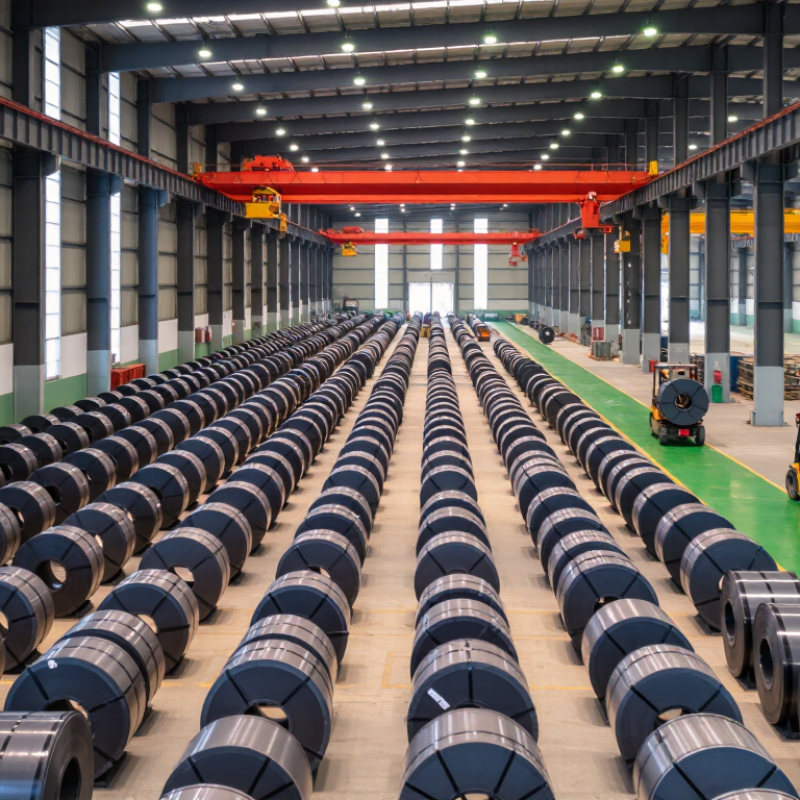
10 Best Black Carbon Steel Coil Suppliers Worldwide

Black Carbon Steel Coil Basics: Hot-Rolled Grades and ASTM A1011

Hot-rolled black carbon steel coil is produced by rolling heated steel into thin, coiled sheet. Its dark mill scale is visible on the surface, especially around slit edges and coil wraps. ASTM A1011/A1011M covers hot-rolled carbon steel sheet and strip, including commercial steel (CS), structural steel (SS), and high-strength low-alloy steel (HSLAS). These categories serve different needs: CS suits general forming, while structural grades are specified when strength requirements matter. Check the exact grade and condition, not just the phrase “black carbon steel.” That detail is easy to miss.

The World Steel Association reported global crude steel production of 1,892.2 million metric tonnes in 2023 in its World Steel in Figures 2024 report. That scale does not make every coil interchangeable. Buyers should compare grade, thickness, width, coil weight, and applicable testing documents against the intended fabrication process. A1011 requirements can include mechanical properties and chemistry, depending on grade. Ask how the material will be cut, formed, and welded; a grade that looks suitable on paper may behave differently in a tight bend. Paperwork helps, but it is not the whole story. ASTM A1011/A1011M and the cited production figures provide useful reference points, though supplier inspection records still deserve a careful read.

Global Supply Context: 1.89 Billion Tonnes of Crude Steel in 2023

Global crude-steel output reached 1.89 billion tonnes in 2023, a scale that frames—but does not guarantee—the availability of black carbon steel coil. Crude steel is an upstream measure, not a count of finished coils. Conversion capacity, product mix, maintenance, energy costs, and regional logistics shape what buyers can actually source. A large headline number can hide tight supply in a particular thickness or delivery window. That distinction matters.

Supplier comparisons should go beyond stated annual capacity. Check coil width and thickness tolerances, surface condition, edge quality, coil weight, and inspection documents. Compare the mill test certificate with the purchase specification, then confirm how coils are protected from moisture during transport. Lead times and port routes matter too; a coil that meets the drawing but arrives late can disrupt fabrication schedules. Small details matter. “Global supply” is not interchangeable stock. Availability varies by grade, finish, and location, while forecasts can miss maintenance outages. Even careful buyers may overlook that gap when reviewing large production figures.

Supplier Comparison Criteria: Coil Dimensions, Grades, and Quality Standards

When comparing black carbon steel coil suppliers, check dimensions against the equipment that will process the material. Confirm thickness, width, coil weight, inner diameter, and outer diameter in writing. A 1,250 mm coil may fit a line, while its core size still causes handling problems. Small mismatches matter.

Grade names alone are not enough. Ask for the applicable specification, chemistry limits, and mechanical properties, such as yield strength and elongation. For forming work, confirm whether the coil’s temper and surface condition suit the intended bends or stamping depth. Request a recent mill test certificate linked to the coil number, not just a generic sample document. Paper is not enough.

Quality standards should be stated clearly, including the relevant ASTM or EN specification and agreed inspection method. Compare thickness tolerances, edge condition, surface defects, and packaging details; photographs can help, but they cannot replace inspection records. Ask how the supplier handles nonconforming coils and preserves traceability after slitting. Some buyers overlook storage. Moisture marks can appear during transit, so clarify wrapping and loading practices. No checklist catches everything, and a perfect certificate can still leave practical questions unanswered.

10 Worldwide Suppliers: Production Capacity, Certifications, and Export Reach

When comparing ten worldwide black carbon steel coil suppliers, look beyond advertised annual capacity. Ask how much capacity is allocated to carbon steel coils, and whether it covers your required thickness, width, grade, and finish. A large figure can look reassuring, yet it may include unrelated products or idle equipment. Request recent production schedules and sample mill test certificates. Small checks matter.

Certifications should be verified by scope, site, and expiry date. A quality-management certificate does not automatically confirm every coil meets your specification. Check traceability, inspection records, and chemical and mechanical test results. Export reach also needs practical evidence: regular shipments to your region, realistic lead times, suitable port access, and complete shipping documents. Ask for references from comparable markets where possible. Even then, delivery performance can change with workload and shipping conditions.

Tips: Compare quoted capacity with your order size and delivery window. Request a trial shipment before placing a large order. Confirm packaging details, such as coil-eye direction and moisture protection. If a supplier’s claims are vague, pause and ask for written proof.

Buyer Verification: Mill Test Certificates, Lead Times, and Logistics Metrics

Choosing among black carbon steel coil suppliers takes more than comparing price sheets. A polished quote can still leave gaps. Request a recent Mill Test Certificate (MTC) linked to the exact heat and coil numbers. Verify grade, chemical composition, tensile results, thickness, and width against your order. Confirm surface condition and stated tolerances. The MTC should match shipment records, not merely a sample from another production run. Small mismatch, big headache.

Lead times need the same scrutiny. Ask whether coils are ready stock or still awaiting production. Request dated milestones for inspection, packing, and dispatch. Compare quoted production days with recent shipment performance, not optimistic estimates alone. For logistics, record the loading port, planned vessel date, transit range, packaging method, and coil weight per unit. These details help assess damage risk and unloading needs. They do not guarantee an on-time arrival. A neat spreadsheet can still miss a weak packing detail, so check it carefully.

Tips: Ask for a redacted MTC, a packing-list example, and three recent delivery dates. Keep the checks practical. Complete documents cannot prove every coil is defect-free; arrange receiving inspection and note any gaps before approving repeat orders.

FAQS

What is black carbon steel coil?

It is hot-rolled steel sheet wound into a coil. Dark mill scale often covers the surface, especially near slit edges.

What does the dark surface indicate?

It is mill scale from hot rolling. It does not identify the coil’s grade or confirm its suitability.

How do commercial and structural grades differ?

Commercial grades generally suit common forming tasks. Structural grades are chosen when specified strength requirements matter. Check the exact grade.

Which coil dimensions should buyers confirm?

Confirm thickness, width, weight, inner diameter, and outer diameter in writing. A coil may fit the line but cause core-handling problems.

What documents should come with a coil?

Request a recent mill test certificate linked to the coil number. Review the listed chemistry and mechanical properties. Generic paperwork is not enough.

What should be checked for bending or stamping?

Confirm the grade, temper, and surface condition suit the planned bends or stamping depth. A paper specification may not predict every tight bend.

How can buyers assess coil quality before delivery?

Agree on tolerances, edge condition, surface checks, and inspection methods. Photos help, but they cannot replace inspection records.

What packaging and traceability details matter?

Ask how coils are wrapped, loaded, and tracked after slitting. Moisture marks can appear during transit. Some questions may still be missed.

Conclusion

This guide explains the basics of black carbon steel coil, including common hot-rolled grades and the role of ASTM A1011 in defining material requirements. With global crude steel production reaching 1.89 billion tonnes in 2023, buyers can choose from a broad international supply base. Comparing suppliers requires more than looking at price: coil thickness, width, weight, grade availability, surface condition, and quality-control standards all affect whether a product suits its intended use.

The overview compares ten worldwide suppliers by production capacity, certifications, and export reach, while emphasizing practical checks for buyers. Before placing an order, request mill test certificates and confirm that the documents match the specified grade and dimensions. Also evaluate quoted lead times, packaging, shipping arrangements, and logistics performance. A clear comparison of these factors can help buyers assess Carbon Steel Coil Black options consistently and select a supplier that can meet technical, quality, and delivery expectations.

Oliver

Oliver

Oliver is a seasoned marketing professional with a wealth of expertise in driving brand awareness and engagement. With a deep understanding of our company's product offerings, he consistently delivers high-quality content that enriches our professional blog. His insights not only shed light on......