Choosing a reliable High Carbon Steel Coil supplier requires more than comparing prices on a spreadsheet. Grade accuracy, carbon consistency, surface condition, and delivery performance can directly affect stamping, spring production, blades, and industrial components. A coil may look excellent under warehouse lighting yet reveal edge cracks during slitting. Small details matter.
This guide reviews seven recognized suppliers serving international markets. The selection considers production capacity, quality systems, material traceability, export experience, technical support, and customer feedback. It also examines practical factors, including coil weight, thickness tolerance, packaging, lead times, and documentation. These details often determine whether a shipment performs smoothly on the factory floor.
No supplier is perfect. That deserves attention. A large mill may offer advanced testing but slower custom production. A smaller distributor may respond faster but provide fewer processing options. Regional availability, freight costs, and changing steel prices can also alter the final decision. Buyers should verify current certifications, inspection reports, and delivery terms before signing an order. Published specifications are useful, but direct communication remains essential.
The suppliers discussed here represent different strengths rather than one universal winner. Some focus on integrated manufacturing, while others provide flexible sourcing and regional inventory. By comparing their capabilities carefully, purchasing teams can reduce avoidable risks and match each supplier with the right application. The goal is not merely to find cheap steel. It is to find dependable material, clear evidence, and support that remains useful after the coil arrives.
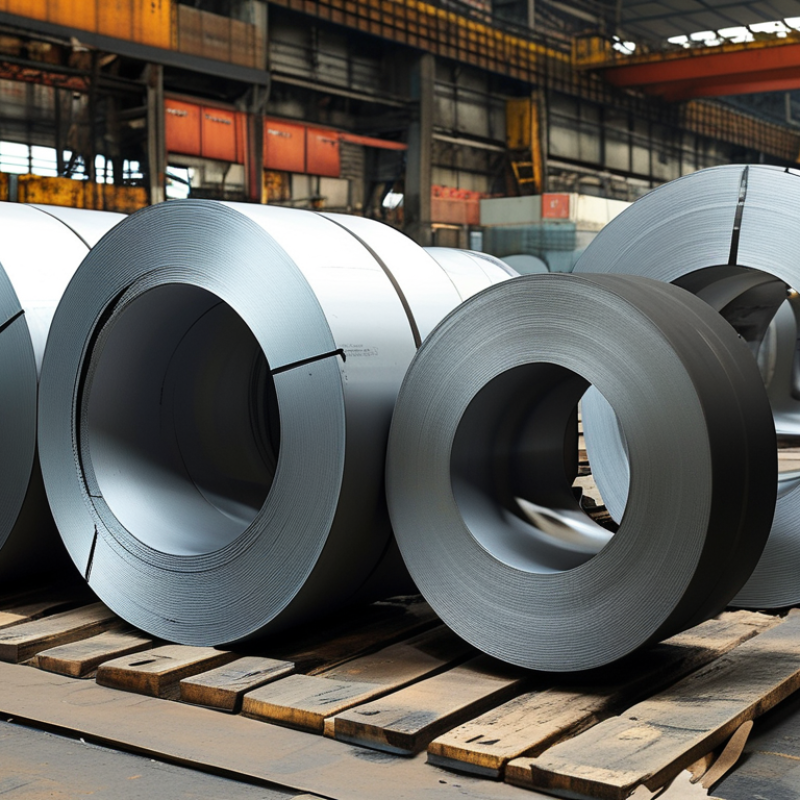
High carbon steel coil is flat steel strip wound into a compact roll, usually containing about 0.60% to 1.00% carbon. The exact boundary varies by standard and product specification. That difference matters. More carbon can increase hardness, tensile strength, and wear resistance after heat treatment. It can also reduce weldability and formability. The International Energy Agency reported that global steel production remains above 1.8 billion tonnes annually, showing the scale of this material’s industrial supply chain.
Manufacturers use high carbon coil for leaf springs, suspension components, saw blades, cutting tools, wire products, and abrasion-resistant parts. A spring may flex thousands of times, while a saw edge needs stable hardness under repeated contact. The USGS Mineral Commodity Summaries 2025 identifies iron and steel as major industrial materials, but production volume alone does not prove coil quality. Carbon uniformity, decarburization depth, surface defects, flatness, and hardness are more practical checks. Small errors become expensive after stamping.
When comparing worldwide suppliers, request the heat number, chemical analysis, mechanical test results, and dimensional tolerances. Ask how the coil was annealed, inspected, and packed against moisture. ASTM and ISO-based testing can improve comparability between mills. Still, certificates need verification. Paperwork can look complete. It may not reveal edge cracking or inconsistent hardness across the coil. In my experience, a trial slit and sample test often exposes issues that a catalog cannot. This step is sometimes skipped, and that is a weakness worth reconsidering.
| Steel Grade / Designation | Typical Carbon Content | Main Characteristics | Common Coil or Strip Forms | Typical Applications | Important Purchasing Considerations |
|---|---|---|---|---|---|
| AISI 1055 | 0.50–0.60% C | Balanced hardness, strength, toughness, and machinability after heat treatment. | Cold-rolled or annealed strip and coil; hardened-and-tempered strip may also be available. | Agricultural blades, springs, knives, hand tools, and general wear-resistant parts. | Confirm flatness, edge condition, annealing state, and required heat-treatment response. |
| AISI 1060 | 0.55–0.65% C | Higher hardness and wear resistance than medium-carbon grades, with moderate toughness. | Annealed cold-rolled coil, precision strip, and heat-treated strip. | Saw blades, cutting tools, discs, springs, and moderately wear-resistant components. | Check decarburization limits, tensile properties, surface finish, and slit-width tolerance. |
| AISI 1075 | 0.70–0.80% C | Good spring properties and high achievable hardness with reduced weldability. | Cold-rolled strip, annealed coil, and hardened-and-tempered spring strip. | Flat springs, agricultural tools, saw blades, knives, scrapers, and industrial clips. | Specify hardness range, yield strength, coil ID/OD, surface quality, and straightness requirements. |
| AISI 1080 | 0.75–0.88% C | High hardness, strength, and elastic response; more sensitive to cracking during forming. | Spring strip, cold-rolled coil, and heat-treated precision strip. | Heavy-duty springs, blades, wear strips, cutting edges, and flexible steel components. | Evaluate forming radius, heat-treatment capability, decarburization, and internal cleanliness. |
| AISI 1095 | 0.90–1.03% C | Very high hardness and wear resistance; limited weldability and lower impact toughness. | Annealed coil, cold-rolled strip, and hardened-and-tempered strip. | High-performance blades, knife stock, scrapers, wear parts, and precision springs. | Require tight control of thickness, surface defects, decarburization, hardness, and edge cracking. |
| JIS SK5 | Approximately 0.75–0.90% C | Japanese tool-steel grade with high hardness, good edge retention, and useful wear resistance. | Cold-rolled strip, annealed coil, and hardened-and-tempered strip. | Pruning shears, saw blades, utility knives, scrapers, and forming tools. | Verify the complete JIS chemical composition, delivery condition, hardness, and dimensional tolerances. |
| EN C100S | 0.95–1.05% C | Non-alloy high-carbon steel offering high hardness and wear resistance after quenching and tempering. | Cold-rolled strip, annealed coil, and precision slit coil. | Industrial blades, measuring components, wear plates, springs, and cutting applications. | Request EN 10132 or applicable product-standard compliance, surface inspection, and heat-treatment documentation. |
: Request mill test certificates linked to specific heat numbers. The documents should show carbon range, chemistry, hardness, strength, and dimensional tolerances. Recent records are more useful than polished marketing claims. Check every detail.
Traceability connects each coil to its melting and testing history. It helps investigate uneven hardness, edge cracks, or unexpected forming problems. The heat number should match the certificate and physical coil markings. Paperwork alone is not enough.
Ask about spheroidized annealing, surface control, and winding tension. A capable team explains how it quarantines defective material. It should also describe root-cause review, corrective action, and retesting. Vague answers deserve caution.
Inspect for edge cracks, uneven thickness, surface scale, and inconsistent hardness. Light scale can conceal small surface defects. Ask for sample coils when fatigue performance or forming behavior matters. Small flaws become expensive.
Review on-time shipment records, packaging methods, minimum order quantities, and response speed. Confirm realistic production schedules and emergency order procedures. Ask how coils are protected from moisture, impact, contamination, and ocean transport. Delays still happen.
Not necessarily. Price may include grade, tempering, slitting, packaging, minimum quantities, and technical support. An unusually low offer may involve longer lead times or weaker quality controls. Compare total landed cost, not weight price alone.
Use independent testing when the application has high fatigue, forming, or safety demands. Testing can verify hardness, tensile strength, thickness, and chemical composition. It provides useful evidence when supplier documents appear incomplete. I might trust certificates too quickly.
A small trial order can reveal packaging, handling, surface, and delivery problems early. Compare trial coils for hardness, thickness tolerance, winding quality, and forming performance. Record every promise in the purchase specification. No supplier is perfect.
This article provides a practical guide to High Carbon Steel Coil, explaining its composition, key properties, and common applications in areas such as tools, springs, blades, automotive components, and industrial machinery. It also outlines the main factors used to evaluate suppliers, including steel grade consistency, carbon content, surface quality, dimensional accuracy, production capacity, certifications, packaging, and delivery reliability.
The article compares seven leading supplier types from different regions without focusing on brand names, highlighting differences in quality control, pricing, manufacturing scale, customization options, and logistics performance. Finally, it explains how buyers can select the most suitable supplier by matching material specifications, order volume, budget, required tolerances, lead time, and after-sales support with their project requirements. This approach helps businesses make informed purchasing decisions and secure reliable High Carbon Steel Coil for both standard and specialized applications.

 Tezhong