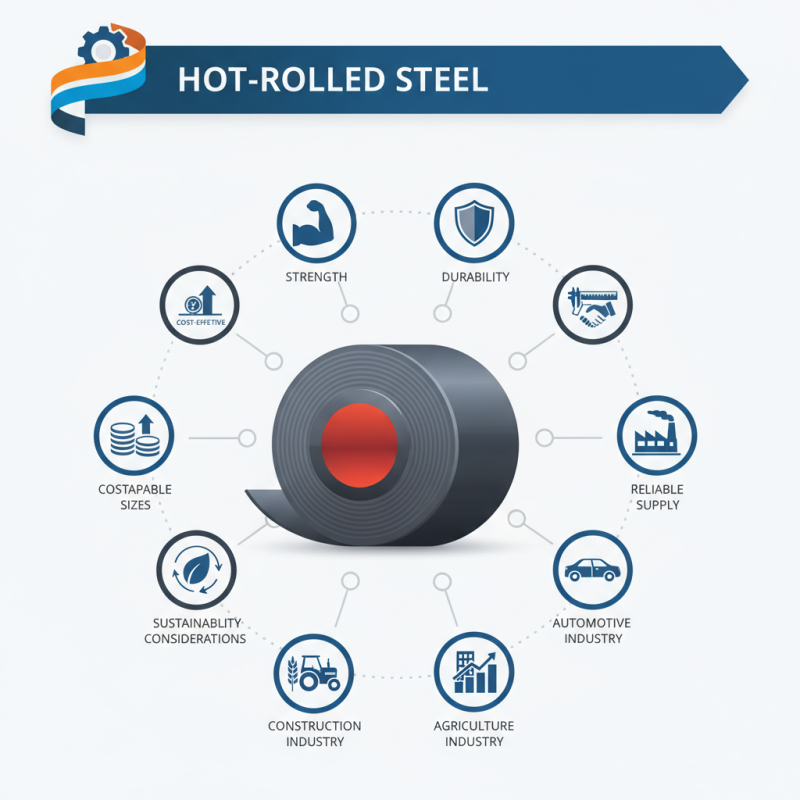
When considering materials for construction and manufacturing, buyers often overlook the advantages of Carbon Hot Rolled Steel Coil. This versatile material offers numerous benefits that can significantly impact project success. Its robust nature makes it a top choice for various industries, including automotive, construction, and agriculture.
Carbon Hot Rolled Steel Coil is favored for its durability and strength. These qualities ensure that structures and products can withstand demanding conditions while remaining cost-effective. Additionally, its manufacturing process allows for a wide range of thicknesses and widths, which enhances its adaptability to specific applications. Buyers can benefit from customized options tailored to their unique needs.
Furthermore, the cost-efficiency of Carbon Hot Rolled Steel Coil is noteworthy. Its availability across various suppliers eases procurement processes. However, it's essential to consider environmental impacts and sustainability practices associated with steel production. While the benefits are compelling, responsibility in sourcing and usage remains crucial. Buyers should aim for reliable suppliers who prioritize sustainable methods.
Benefits of Enhanced Durability of Carbon Hot Rolled Steel Coils
Carbon hot rolled steel coils are known for their enhanced durability, making them a preferred choice among various industries. According to a recent industry report, these coils exhibit excellent mechanical properties, which contribute to their long service life. The toughness of hot rolled steel allows it to withstand significant stress and strain, making it ideal for structures that endure heavy loads.
The resilience of carbon hot rolled steel is quantified by its yield strength, typically ranging from 250 to 500 MPa. This means they can handle higher impact without deforming. Furthermore, they are processed at high temperatures, which refines the microstructure, enhancing ductility. This property is particularly beneficial for applications in construction and manufacturing, where material failure can lead to costly setbacks.
While the benefits are clear, challenges remain. Variability in quality can sometimes arise during production. Buyers must ensure they source from reliable suppliers to mitigate risks. Additionally, environmental concerns related to the production process should not be overlooked. Addressing these issues requires a commitment to continuous improvement and innovation in production techniques.
Cost-Effectiveness: Analyzing Price-Performance Ratio of Carbon Steel Coils
Cost-effectiveness is a crucial factor for buyers considering carbon hot rolled steel coils. According to a recent report by the Metal Components Institute, the price-performance ratio for carbon steel coils stands out among various materials. Buyers can expect a lower initial investment compared to other steel types. The average cost for carbon hot rolled steel coils hovers around $700 per ton, making it a popular choice in construction and manufacturing.
Moreover, carbon steel coils provide durability and longevity without significant maintenance costs. The American Institute of Steel Construction notes that carbon steel’s resistance to wear and tear enhances its lifecycle. This means that while the upfront costs are appealing, the long-term savings add to its overall value. However, fluctuations in raw material costs can impact pricing. Buyers must stay informed about market trends to make wise purchasing decisions.
Despite these advantages, the variety in quality and specifications can be confusing. Not all carbon steel coils meet the same standards. This inconsistency might lead to unexpected challenges in projects. Evaluating suppliers and understanding material grades is essential to avoid pitfalls. Buyers should seek detailed specifications and certifications to ensure the product meets their requirements.
Versatility in Applications: Industries Benefiting from Carbon Hot Rolled Steel
Carbon hot rolled steel coils are essential in many industries, showcasing their versatility and wide-ranging applications. Manufacturing, automotive, and construction sectors all rely on this material. According to the World Steel Association, the global demand for hot rolled steel products is expected to grow by 3% annually. This growth reflects its integral role in fabricating essential components, such as beams, plates, and automotive parts.
The material’s adaptability enhances its use across diverse applications. In construction, hot rolled steel forms the backbone of infrastructure projects, ensuring structural integrity. The automotive industry uses it for creating robust frames and body panels, which must withstand high levels of stress. Its performance characteristics make it ideal for both structural and aesthetic functions.
Tip: When selecting carbon hot rolled steel coils, consider thickness and width tailored to your project needs. Always ensure to evaluate the environmental impact of sourcing steel. Keep in mind fluctuating market prices; such volatility may influence procurement decisions. Emphasizing quality can lead to cost-effectiveness in the long term, even if initial investments are higher.
Sustainability Metrics: Environmental Impact of Carbon Steel Production
The environmental impact of carbon steel production is complex. Carbon steel, especially hot rolled steel coils, contributes significantly to greenhouse gas emissions. According to the World Steel Association, the steel industry accounted for approximately 7% of global CO2 emissions in 2020. This figure raises concerns about sustainability, given the growing demand for eco-friendly materials.
Energy consumption during the production of carbon steel is noteworthy. It typically requires 1.6 to 2.0 gigajoules (GJ) per ton of steel. This heavy energy input often relies on fossil fuels, thus exacerbating environmental degradation. However, advancements in technology are being made to reduce energy consumption and emissions. For example, using electric arc furnaces can lower emissions by up to 50%, highlighting the industry's potential for improvement.
Recycling provides a glimmer of hope. About 80% of carbon steel is recyclable, significantly lessening the environmental footprint. Incorporating recycled materials can cut energy use by over 75%. Yet, challenges remain. The recycling process still consumes energy and generates some emissions. Industry stakeholders must navigate these trade-offs to enhance sustainability metrics.
Top 10 Benefits of Carbon Hot Rolled Steel Coil for Buyers
Market Trends: Projected Growth and Demand for Carbon Hot Rolled Steel Coils
The market for carbon hot rolled steel coils is witnessing significant growth. Analysts predict an increase in demand driven by various industries. Automotive, construction, and manufacturing sectors are leading this surge. These industries rely on carbon hot rolled steel for its strength and versatility.
The rise in construction projects, both commercial and residential, is a key factor. Infrastructure development initiatives worldwide are creating a solid need for durable materials. Carbon hot rolled steel coils offer excellent formability, making them ideal for structural applications. Buyers must consider these traits when assessing their sourcing options. However, fluctuations in raw material prices can impact the market. It’s essential for buyers to stay informed about these economic shifts.
Investing in carbon hot rolled steel coils can yield long-term benefits, yet challenges exist. Quality control and consistency remain important concerns. Buyers should prioritize sourcing from reliable suppliers to avoid potential pitfalls. Understanding market trends is crucial for making informed decisions.
Top 10 Benefits of Carbon Hot Rolled Steel Coil for Buyers
| Benefit |
Description |
Market Demand (%) |
Projected Growth by 2025 (%) |
| Cost-Effectiveness |
Lower manufacturing costs compared to other steel types. |
25 |
8 |
| Versatility |
Used in various applications from construction to automotive. |
30 |
10 |
| Wide Availability |
Easily sourced from suppliers worldwide, ensuring steady supply. |
40 |
5 |
| Structural Integrity |
Provides strength and durability for building structures. |
35 |
7 |
| Ease of Fabrication |
Can be easily cut, welded, and shaped for various uses. |
28 |
6 |
| Weldability |
Excellent for welding applications without compromising strength. |
33 |
9 |
| Surface Finish |
Provides a smooth surface that's ideal for many applications. |
29 |
8 |
| Strength-to-Weight Ratio |
Offers high strength with less weight, improving efficiency. |
27 |
7 |
| Sustainability |
Recyclable material with lower environmental impact. |
31 |
12 |
| Technology Advances |
Innovations in the production process enhance quality and performance. |
26 |
11 |
Conclusion
The article "Top 10 Benefits of Carbon Hot Rolled Steel Coil for Buyers" explores the numerous advantages of using Carbon Hot Rolled Steel Coils across various industries. One major benefit is their enhanced durability, which ensures longevity and reliability in construction and manufacturing applications. Furthermore, these steel coils are noted for their cost-effectiveness, providing a favorable price-performance ratio that appeals to budget-conscious buyers.
Additionally, the versatility of Carbon Hot Rolled Steel Coils allows them to be utilized in multiple sectors, reflecting their broad market appeal. The article also emphasizes the sustainability metrics associated with their production, highlighting the reduced environmental impact compared to other materials. Lastly, it discusses current market trends, predicting substantial growth and increasing demand for Carbon Hot Rolled Steel Coils in the coming years, reinforcing their importance in industrial applications.

 Tezhong