Choosing a Carbon Steel Q235 Coil supplier is not just a price comparison. A low quote can look attractive, yet unclear tolerances or thin documentation may create costly delays. Buyers need to check grade records, coil dimensions, surface condition, packing, and delivery capability. Small details matter. A wet, poorly secured coil can arrive with surface rust or damaged edges.
Metallurgist John D. Verhoeven’s published work offers a useful reminder: steel performance depends on composition and processing, not a grade label alone. That principle matters when comparing suppliers, because product names do not replace mill test certificates or agreed specifications. Ask for recent test documents, confirm thickness and width tolerances, and clarify how claims are handled. Also check whether the supplier can provide traceable batches and export-ready packing. A clear answer is reassuring. A vague one deserves follow-up.
This guide reviews seven suppliers for global buyers, focusing on product information, quality controls, communication, and shipping support. It does not assume that one company fits every market or application. Requirements vary, and Q235 specifications may need careful alignment with the buyer’s governing standard. Even a detailed checklist has limits; independent verification can still be necessary for a high-volume order. Use the comparisons as a starting point, then confirm current terms directly with each supplier.
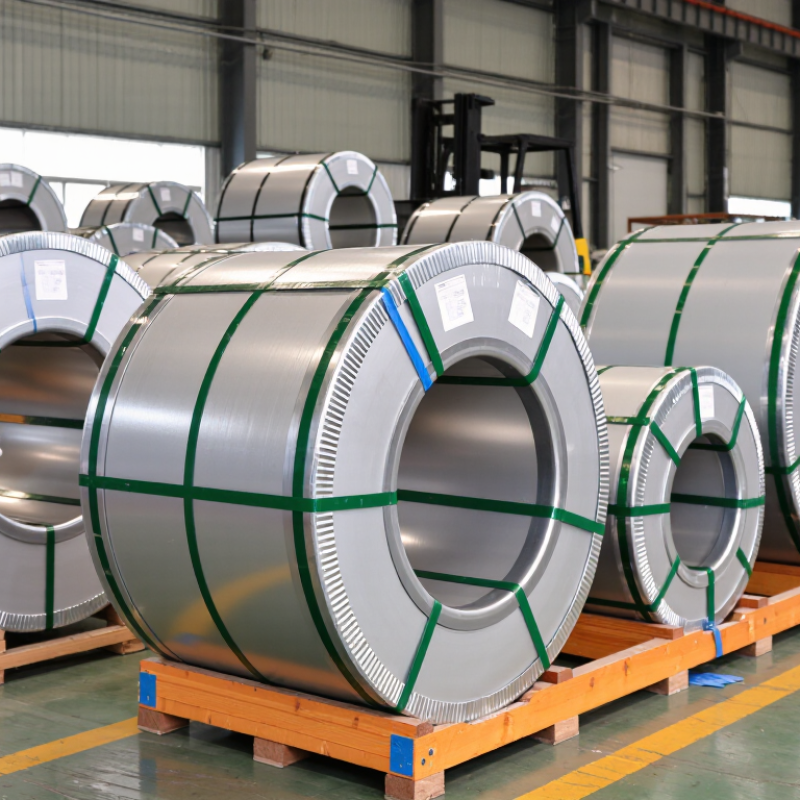
Q235 is a Chinese carbon structural-steel grade commonly supplied as coil for further processing. Under GB/T 700-2006, its minimum yield strength is 235 MPa for material up to 16 mm thick; the specified minimum falls for thicker sections. Check the product certificate, thickness, and delivery condition rather than relying on the grade name alone. That matters.
After slitting or leveling, Q235 coil can be roll-formed into light sections, welded into tubes, or stamped into brackets, shelving, and equipment housings. It is often selected for general fabrication because it can be formed and welded using established shop methods. World Steel Association’s World Steel in Figures 2024 reports global crude-steel production of 1,892.2 million tonnes in 2023, illustrating the scale of steel supply—not Q235 coil demand specifically. One practical wrinkle: coil quality and surface condition can vary, so confirm tolerances and intended use before production. Q235 should not be assumed equivalent to another country’s grade without checking the applicable specifications.
A reliable Q235 coil supplier should prove what each coil contains, not just quote a grade. Request a mill test certificate tied to the coil number, with chemical composition and mechanical properties. Check the stated standard and revision, and confirm that thickness, width, and tolerance match your purchase specification. Q235 is a Chinese grade; do not assume a proposed “equivalent” grade is interchangeable without written approval. Numbers matter.
Inspect sample coils for edge condition, rust, dents, and surface marks under good lighting. Ask how the supplier controls batch traceability and protects coils during storage and shipment. Packaging details matter: moisture-resistant wrapping and secure eye protection can reduce handling damage. For critical orders, arrange independent inspection before dispatch. A certificate alone is not a physical inspection.
Capacity and delivery claims also need evidence. The World Steel Association’s World Steel in Figures 2024 reports that China produced about 1,019 million tonnes of crude steel in 2023. That scale does not guarantee consistent coil quality from any individual mill. Request recent production records, achievable monthly volume, and a realistic shipping schedule. Check the coil. I would also compare the supplier’s response to a specific complaint scenario; vague answers are a warning, though even careful buyers can miss problems.
7 Best Carbon Steel Q235 Coil Suppliers for Global Buyers?
Profiles of Seven Suppliers Serving Global Buyers
Global buyers can assess seven supplier types: integrated mills, export-focused producers, regional stockists, and steel service centers. Mills may offer direct production traceability, while stockists can suit urgent, smaller orders. Service centers often provide slit coils or customized packing. Export-focused producers typically coordinate shipping documents and seaworthy packaging. The World Steel Association reported 1,888.2 million tonnes of crude steel production in 2023, showing the scale of the industry—not the availability of any specific Q235 coil. Check each supplier’s current production capacity and stock.
Three further options are coil processors, project sourcing firms, and digital sourcing intermediaries. Processors can supply specified widths; project firms may consolidate orders from multiple mills. Online intermediaries can help compare quotations, but a low price alone proves little. Request the producing mill’s test certificate, confirm the Q235 standard and thickness tolerance, and compare coil weight, surface condition, and delivery terms. Some offers still leave details unclear. Resolve them before placing an order.
Tips: Ask for recent inspection records and clear photos of coil edges, labels, and packaging. Confirm who handles claims if dimensions or certificates do not match the order.
This comparison describes common supplier types, not named companies. Q235 is a Chinese carbon structural steel grade specified in GB/T 700. Availability, dimensions, export capability, and product conformity vary by supplier and order; verify them against a current quotation and mill test certificate.
| Supplier profile | Typical role in the supply chain | Potential fit for global buyers | Key checks before ordering |
|---|---|---|---|
| 1. Integrated steel mill | Produces steel and may supply coil directly or through a sales channel. | May suit buyers seeking mill-level documentation or substantial volumes. | Confirm Q235 grade, production standard, order minimum, lead time, and whether the mill itself is the contracting party. |
| 2. Mill-authorized export agent | Coordinates export sales and logistics for one or more producing mills. | May help overseas buyers communicate specifications and arrange export procedures. | Request evidence of authorization, identify the actual producer, and check who issues the invoice and mill test certificate. |
| 3. Regional steel service center | Stocks steel and may offer processing or local distribution services. | Can be useful when buyers need smaller quantities or delivery from regional inventory. | Check stock status, coil identification, traceability to the producer, and whether processing affects the requested tolerances. |
| 4. Coil processor or slitting center | Processes wide coils into narrower coils or other agreed formats, subject to equipment capability. | May suit buyers whose production lines require specific coil widths or processed edges. | Confirm available width and thickness range, slit-width tolerance, edge condition, packaging, and responsibility for material traceability. |
| 5. Steel stockholder | Purchases and resells material held in inventory. | May be appropriate for prompt availability or mixed requirements, depending on stock. | Verify actual inventory, production batch, storage condition, certificate availability, and any additional handling or resale costs. |
| 6. Steel export trading company | Sources steel from producers or distributors and arranges commercial export transactions. | May offer sourcing coordination for buyers managing international procurement. | Establish the producer and shipment route, confirm payment terms, inspect contract specifications, and independently assess counterparty credentials. |
| 7. Online B2B sourcing platform | Provides a channel for finding and contacting suppliers; listing and verification practices differ by platform. | May help buyers compare offers and identify potential suppliers across markets. | Treat listings as leads, not proof of product or company credentials. Verify the seller, producer, documents, specifications, and transaction protections independently. |
Buyer checklist: Specify the required grade and standard, thickness, width, coil weight, quantity, surface and edge requirements, packaging, inspection documents, delivery term, destination, and required shipment date. Confirm that the certificate and contract describe the same material.
Comparing Product Quality, Capacity, and Export Services
Choosing among Q235 coil suppliers calls for more than comparing quoted prices. The World Steel Association’s World Steel in Figures 2024 reports global crude steel production of 1,892.2 million tonnes in 2023. That scale signals a competitive market, not consistent coil quality. Buyers should check that the offered grade meets GB/T 700 requirements, then review mill test certificates for chemistry and mechanical properties.
Ask for coil thickness, width, weight, and tolerance ranges in writing. Small variations can complicate stamping or fit-up.
Capacity matters when delivery schedules are tight, but a large figure alone proves little. Request recent production availability, typical lead times, and loading plans.
Export service deserves equal scrutiny: confirm seaworthy packaging, moisture protection, coil-eye orientation, and shipping documents before dispatch. Request photos of finished packing.
A supplier’s answers should match the purchase specification; if they do not, pause and clarify. No checklist removes every risk.
Tips: Compare sample certificates against the ordered specification, and ask how claims are handled. Check that labels identify grade, dimensions, and coil number. Take care with unusually low offers; the savings may not offset reinspection, delays, or rework.
Start by defining the coil you need: thickness, width, weight, surface condition, and intended forming or welding use. Confirm the applicable Q235 standard and its edition; a grade name alone does not prove that two offers are equivalent. Request a mill test certificate showing chemical composition and mechanical properties, then compare its details with your purchase specification. Check the heat number. It should connect the certificate to the coil and its markings.
Ask how the supplier controls thickness tolerances, surface defects, and coil packing. Request recent inspection records and clear photos of edge condition, labels, and packaging. If the order is large, consider an independent inspection before shipment. A supplier’s polished brochure tells you little about routine quality. In practice, this check is easy to rush. A vague answer about tolerances deserves a follow-up, not an assumption.
Verify production capacity, delivery estimates, export packing, and the process for handling claims. Ask for references from buyers with similar requirements, and compare quotations item by item rather than choosing the lowest price alone. For a new supplier, a small trial order can reveal issues with documentation or communication before larger commitments. It is not a perfect test, but it can expose gaps early. Keep specifications, approved samples, and inspection criteria in writing, so both sides have the same basis for acceptance.
Q235 is a Chinese carbon structural-steel grade commonly supplied in coil form. Its minimum yield strength is 235 MPa for material up to 16 mm thick.
After slitting or leveling, it can be roll-formed into light sections or welded into tubes. It is also used for stamped brackets, shelving, and equipment housings.
No. Surface condition and coil quality can vary. Check the certificate, thickness, delivery condition, and intended use before production.
Request the producing mill’s test certificate and recent inspection records. Confirm that chemistry and mechanical properties match the order.
Put thickness, width, weight, and tolerance ranges in writing. Small variations can affect stamping or fit-up.
Ask about current production availability, typical lead times, and loading plans. A large capacity figure alone proves little.
Confirm seaworthy packaging, moisture protection, coil-eye orientation, and shipping documents. Ask for photos of the finished packing.
Not necessarily. Reinspection, delays, or rework may erase the savings. I might still focus too much on price sometimes.
Do not assume equivalence from the grade name alone. Check the applicable specifications and product certificate. Details matter.
This guide explains what Carbon Steel Q235 Coil is, how its strength, formability, and workability suit common applications such as construction, fabrication, machinery, and general manufacturing. It outlines practical criteria for assessing suppliers, including material consistency, dimensional accuracy, production capacity, quality documentation, communication, and the ability to meet delivery requirements.
The article also reviews seven supplier profiles serving international buyers without focusing on brand names, and compares their product quality, manufacturing scale, and export services. Buyers are encouraged to verify specifications, request relevant test documents and samples, assess production and logistics capabilities, and clarify pricing, packaging, lead times, and after-sales support before making a selection. These steps can help organizations identify a dependable supplier whose products and services match their technical needs, purchasing schedule, and quality expectations.

Tezhong