2026 Best Types of Carbon Steel Floor Coils for Buyers

Time:2026-09-24 Author:Aria
0%

Choosing Carbon Steel Floor Coils is not just a matter of picking a thickness and price. Surface pattern, grade, coil width, and forming method all affect performance on the shop floor. A raised tear pattern can improve grip on platforms and walkways, while a smooth hot-rolled surface may suit parts that receive further fabrication. Small differences matter.

The World Steel Association’s October 2024 Short Range Outlook projected global steel demand at about 1.75 billion tonnes in 2025, following a modest recovery. That broad market signal helps explain why buyers compare availability and lead times alongside material properties. It does not, however, identify the right floor coil for a specific project. Buyers still need verified mill test certificates, clear dimensional tolerances, and confirmation that the supplied grade matches the intended forming and service conditions.

This guide examines common options, including hot-rolled, pickled-and-oiled, galvanized, and patterned carbon steel coils. Each offers trade-offs. Galvanizing adds corrosion protection, but may affect welding or coating choices. Patterned plate improves traction, yet its raised surface can complicate measurements and finishing. A coil label alone is not enough.

Good procurement starts with the real use case: indoor or outdoor exposure, foot traffic, cleaning routines, and fabrication equipment. Check the details. Even experienced buyers can overlook them. The comparisons ahead provide a practical starting point, not a substitute for engineering review or supplier documentation. One caution remains: published market forecasts describe steel broadly, not floor-coil demand specifically.
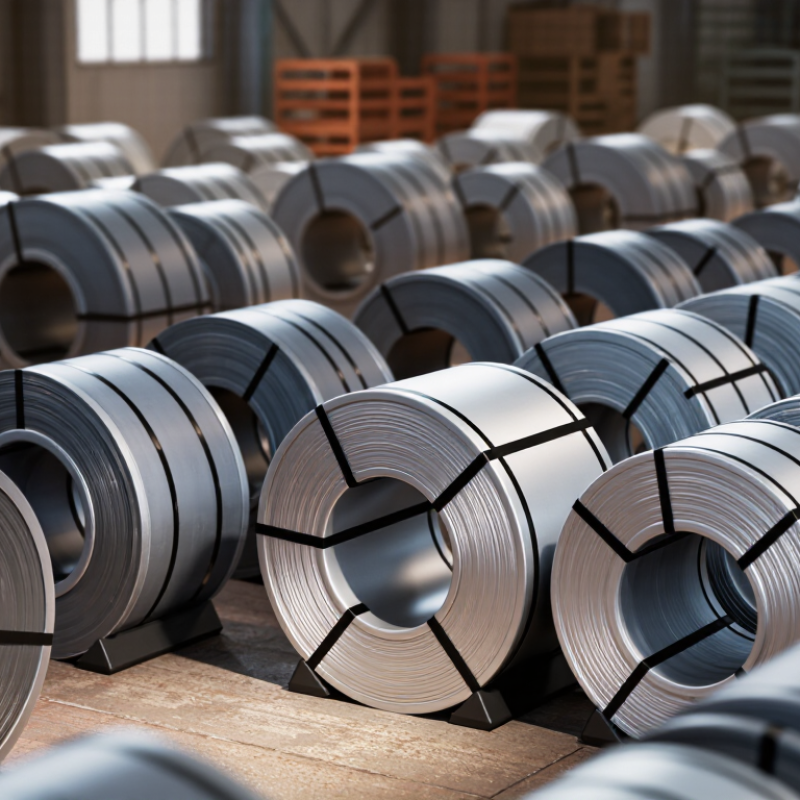
2026 Best Types of Carbon Steel Floor Coils for Buyers

What Carbon Steel Floor Coils Are and How They Are Made

Carbon steel floor coils are wide, wound strips used to form floor decking, panels, and related building components. “Floor coil” is a trade description, not one fixed steel grade. Buyers should check the specified grade, thickness, width, surface condition, and forming requirements before comparing prices. A coil that looks smooth under warehouse lights may still have edge waves or thickness variation that complicates forming.

Production begins with ironmaking and steelmaking, where carbon content and other elements are controlled to meet a target specification. The steel is cast into slabs, reheated, and passed through rollers to reduce its thickness. Hot-rolled coil may be pickled to remove scale; some products are then cold-rolled for tighter dimensions or a smoother surface. Slitting and leveling prepare the strip for downstream use. These steps matter. A small thickness deviation can affect fit across a long floor span. The World Steel Association reported 1,888.2 million tonnes of global crude steel production in 2023, illustrating the scale of the material supply chain, not the availability of any particular floor-coil grade. Buyers should request mill test certificates and verify measured thickness and coil weight on receipt; paperwork alone is not a perfect check.

Key Grades and Strength Levels Available in 2026

For buyers comparing carbon steel floor coils in 2026, grade names matter less than verified mechanical properties. ASTM A1011/A1011M covers hot-rolled sheet and strip, with Structural Steel Grade 36 offering a minimum yield strength of 36 ksi, while Grade 50 offers 50 ksi. Higher-strength options, such as Grade 80, can reduce weight in some designs, but forming and welding requirements need closer review. Check the mill test certificate, coil thickness, and applicable product specification before ordering.

Strength is only part of the decision. A floor coil may be patterned or intended for later fabrication, so confirm that its surface and dimensions match the finished-use requirements. The World Steel Association’s World Steel in Figures 2024 reports global crude steel production of about 1.89 billion tonnes in 2023. That scale shows a mature, high-volume industry, but it does not guarantee that every coil meets a buyer’s needs. Small differences matter.

Look beyond the grade label. Ask for yield and tensile results, chemistry, and thickness tolerances. A useful check. Higher strength may bring trade-offs in bending or cutting, and actual performance depends on thickness and processing. I would not choose a floor coil by strength alone; matching documented properties to the fabrication route is the safer buying decision.

2026 Best Types of Carbon Steel Floor Coils for Buyers - Key Grades and Strength Levels Available in 2026
Steel grade / specification Typical product form Minimum yield strength Tensile strength Buyer considerations for floor use
ASTM A36 Structural carbon steel; may be supplied as plate or coil subject to producer availability 36 ksi (250 MPa) for material up to 8 in. thick 58–80 ksi (約400–550 MPa) Common general-purpose structural grade. Confirm the product form, thickness, and applicable specification with the supplier.
ASTM A572 Grade 50 High-strength low-alloy structural steel; coil availability depends on thickness and mill 50 ksi (345 MPa) for material up to 4 in. thick 65 ksi (450 MPa) minimum Offers higher specified yield strength than A36. Check the standard’s thickness limits and the mill test certificate.
ASTM A1011 SS Grade 36 Hot-rolled sheet and strip, including coil products within the specification’s scope 36 ksi (250 MPa) minimum 50 ksi (340 MPa) minimum A practical option when a hot-rolled sheet or strip specification is appropriate. Verify thickness, finish, and any floor-pattern requirements separately.
ASTM A1011 HSLAS Grade 50 Hot-rolled high-strength low-alloy sheet and strip 50 ksi (345 MPa) minimum 65 ksi (450 MPa) minimum Specified strength can support weight-conscious designs, but suitability depends on engineering, forming needs, thickness, and service conditions.
EN 10025-2 S235JR European structural steel; commonly supplied as plate and may be available in coil form by product range 235 MPa minimum for nominal thickness up to 16 mm 360–510 MPa for nominal thickness up to 3 mm A common European structural grade. Strength values vary with thickness; confirm the relevant standard table and delivery condition.
EN 10025-2 S355JR European structural steel; coil supply is subject to dimensions and mill availability 355 MPa minimum for nominal thickness up to 16 mm 470–630 MPa for nominal thickness up to 3 mm Higher specified yield strength than S235JR. Confirm thickness-dependent properties and whether the grade meets the project’s design code.
ASTM A1011 CS Type B Hot-rolled commercial-quality sheet and strip No single minimum yield strength specified for this designation No single minimum tensile strength specified for this designation Consider for applications where forming and commercial quality are priorities, not where a specified structural strength is required. Request certified properties if needed.
Note: “Floor coil” describes a supply form, not a universal steel grade or surface pattern. Checkered or raised-pattern flooring may be covered by separate product specifications, and pattern geometry does not establish structural capacity. Strength values above are specification-based minima or ranges for the stated thickness conditions; confirm the current standard edition, dimensions, test results, and intended-use requirements with the supplier and project engineer. ksi values are rounded where converted from MPa.

Common Floor Coil Patterns, Finishes, and Thicknesses

Carbon steel floor coils are commonly supplied with raised patterns that improve grip and help channel light spills. A diamond pattern is familiar and easy to inspect; a five-bar pattern creates a busier, more directional surface. Choose by foot traffic, cleaning needs, and the appearance of the finished floor. A raised pattern can look right and still feel wrong under a boot.

Finishes range from mill finish to oiled or coated surfaces. Mill finish may show scale and color variation, so check sample pieces in the actual lighting. Oiled material can resist rust during storage, but oil may need removal before painting or bonding. For exposed floors, a protective coating can help, though scratches and cut edges still need attention. Ask how the coil was protected and how long it can remain stored.

Thickness is usually specified for the steel base, not the raised pattern height. Confirm this on the order; otherwise, the delivered sheet may seem thinner than expected when measured across a raised area. Thicker stock generally offers greater stiffness, but support spacing and load matter too. Thin coils can suit formed covers or light-duty panels. Heavy-use platforms often need a structural review. Small detail, big difference. Compare tolerances, coil width, and intended fabrication method before buying.

2026 Best Types of Carbon Steel Floor Coils for Buyers

Common floor coil patterns and typical thickness ranges

Typical commercial thickness ranges vary by supplier, specification, and market. Checker, diamond, tear-drop, lentil, and five-bar patterns are commonly used for floor plate applications. Carbon steel coils may be supplied with a mill finish or, where specified, pickled and oiled; confirm whether stated thickness refers to base metal or overall patterned plate thickness.

How to Match Floor Coil Types to Their Intended Uses

2026 Best Types of Carbon Steel Floor Coils for Buyers

How to Match Floor Coil Types to Their Intended Uses

Match the coil to the surface’s job, not just its appearance. Checkered carbon steel coil suits platforms, stair treads, and service walkways where raised patterns can improve underfoot grip. Pattern height and spacing matter. Mud, oil, or ice can still reduce traction, so a raised surface is not a complete safety solution. Confirm the required thickness against expected loads and support spacing.

Smooth hot-rolled coil is often a practical choice for fabricated floor parts that will be embossed, cut, or welded later. Pickled and oiled coil can offer a cleaner starting surface for further processing, but oil may need removal before finishing. For damp or corrosive settings, consider whether a suitable coating or another material is needed. Carbon steel can rust; paint alone may not last where water collects.

Look closely at the real installation conditions. A warehouse aisle, outdoor landing, and machine platform place different demands on a floor panel. Ask suppliers for thickness tolerances, coil width, surface details, and material documentation. Then compare those details with the fabricator’s forming limits and the project specification. Buyers sometimes focus on pattern alone. That is an easy detail to miss.

How Buyers Can Compare Quality, Costs, and Supplier Options

Buyers comparing carbon steel floor coils should start with the service environment, not the lowest quoted price. Hot-rolled black coils suit dry, indoor floors where appearance is secondary. Pickled-and-oiled coils offer a cleaner surface for further processing, while patterned coils provide added grip. Check thickness, width, pattern height, flatness, and edge condition against the intended fabrication method. Small variations can complicate cutting and welding.

The World Steel Association reported global crude steel production of about 1.88 billion tonnes in 2024. That scale does not guarantee consistent coil quality. Ask suppliers for mill test certificates, heat numbers, dimensional tolerances, and recent inspection records. Compare delivered cost, including freight, slitting, protective packaging, and expected scrap—not just the price per tonne. Get samples. A quick visual check may reveal oil marks, rust, or uneven patterns, but it cannot replace measurement. ASTM A786/A786M provides a reference specification for hot-rolled steel floor plates; buyers should confirm whether the offered coil matches their required grade and dimensions. Supplier reliability also matters: review lead times, minimum order quantities, packing details, and how defects are handled. One quote looked cheaper until slitting fees appeared. That happens.

FAQS

Which strength grades are mentioned for carbon steel floor coils?

The article lists Structural Steel Grade 36, Grade 50, and Grade 80 under ASTM A1011/A1011M. Their minimum yield strengths include 36 ksi for Grade 36 and 50 ksi for Grade 50. Grade 80 may reduce weight in some designs, but fabrication needs closer review.

What documents and test results should buyers check?

Review the mill test certificate, product specification, and thickness details. Ask for yield strength, tensile strength, steel chemistry, and thickness tolerances. A grade label alone is not enough.

How should I choose between diamond and five-bar patterns?

Diamond patterns are familiar and easy to inspect. Five-bar patterns create a busier, more directional surface. Consider foot traffic, cleaning needs, and how the floor feels under a boot. It can look right and still feel wrong.

What should I know about mill-finished, oiled, and coated surfaces?

Mill finish may show scale and color variation, so check sample pieces under the actual lighting. Oiled coils may resist rust during storage, but the oil might need removal before painting or bonding. Coatings can help on exposed floors, though scratches and cut edges still need attention.

How is coil thickness measured?

Thickness usually refers to the steel base, not the raised pattern. Confirm this on the order. Measuring across a raised area can make the sheet seem thicker than its base thickness.

Does thicker steel always make a better floor?

Not necessarily. Thicker stock generally offers more stiffness, but support spacing and expected loads matter too. Thin coils may suit formed covers or light-duty panels; heavy-use platforms need structural review.

Can higher-strength steel be difficult to fabricate?

It can bring trade-offs in bending or cutting. Forming and welding requirements may need closer review, and performance depends on thickness and processing. I would not choose by strength alone.

What details should I confirm before ordering?

Check the grade, verified mechanical properties, coil thickness and width, surface protection, tolerances, and intended fabrication method. Small details matter. Verify that the dimensions and surface suit the finished floor.

Conclusion

This guide explains what Carbon Steel Floor Coils are, how they are produced, and what buyers should consider when choosing them in 2026. It outlines how different grades and strength levels affect durability and performance, while comparing common surface patterns, finishes, and thicknesses. These features can influence traction, appearance, fabrication, and suitability for different environments.

Choosing the right coil starts with matching its specifications to the intended use, expected wear, and installation requirements. Buyers can also use the guide to compare quality indicators, evaluate total costs, and assess supplier options. By weighing performance needs against budget and product consistency, purchasers can make a more informed choice and select floor coil materials that fit their project’s practical requirements.

Aria

Aria

Aria is a dedicated marketing professional with a deep passion for innovative strategies and a keen understanding of our company's product offerings. With a wealth of experience in the industry, Aria excels at crafting engaging content that highlights the unique features and benefits of our......