7 Tips for Buying Carbon Steel Coil Rolls

Time:2026-11-02 Author:Sophia
0%

Buying a Carbon Steel Coil Roll is not just a price comparison. Grade, thickness, width, coating, and dimensional tolerance all shape how the coil performs on your production line. A few millimeters of variation can affect feeding, forming, and scrap rates. Ask suppliers for current mill test certificates, agreed tolerances, and clear packaging details. Check how the coil will be stored and transported, too. Moisture marks can turn into costly rework.

The scale of the market makes careful purchasing important. World Steel Association data puts global crude steel production at about 1.89 billion tonnes in 2023. The International Energy Agency estimates that iron and steel production creates around 2.6 billion tonnes of direct CO₂ emissions each year. Those figures do not tell you which coil to buy. They do show why traceability, material efficiency, and reliable specifications matter. Edwin Basson, Director General of worldsteel, has described steel as “the most important engineering and construction material in the world.” That is a broad statement, but it captures the material’s reach.

One uncomfortable truth: the lowest quote may not be the lowest-cost choice. Freight, yield loss, surface defects, and delayed delivery can outweigh a small price saving. I have no universal checklist that fits every buyer; application and processing conditions matter. Use these seven tips to compare offers, question vague specifications, and reduce avoidable surprises. Start with the details that are easy to overlook. Then verify them before placing the order.
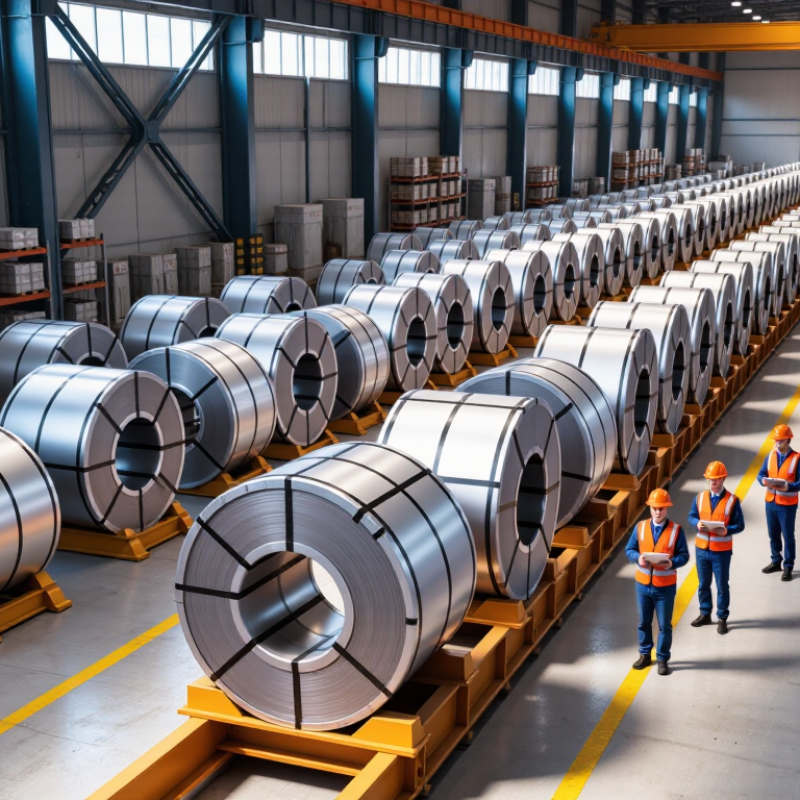
7 Tips for Buying Carbon Steel Coil Rolls

Identify the product route: ASTM A1011 hot-rolled or A1008 cold-rolled

Before requesting quotes, identify the product route. ASTM A1011/A1011M covers hot-rolled sheet and strip; ASTM A1008/A1008M covers cold-rolled carbon steel sheet. Specify the standard, grade, thickness, width, and edge condition on the order. “Carbon steel” alone is too broad. Check the mill test certificate, too.

Hot-rolled coil often has dark oxide scale and may show greater thickness variation. It can suit parts where surface appearance is less critical. Cold-rolled coil usually has a smoother surface and tighter dimensional control, useful for visible panels and repeatable stamping. But it is not automatically stronger. Compare grade, temper, yield strength, and elongation. A thin coil can behave differently during forming than its label suggests.

For market context, the World Steel Association’s World Steel in Figures 2024 reports global crude steel production of 1,892.2 million tonnes in 2023. That figure describes scale, not the quality of any individual coil. Ask for the heat number and actual thickness range, then compare them with the certificate and your incoming inspection. A caliper check at several points helps. It is not a full inspection. ASTM route identification is only a starting point; buyers can still miss a finish requirement when the purchase description is vague.

Set thickness, width, and tolerances under ASTM A568/A568M

7 Tips for Buying Carbon Steel Coil Rolls

Before comparing prices, define the required thickness and width in writing. ASTM A568/A568M sets general requirements for hot- and cold-rolled steel sheet, including dimensional tolerances. The applicable product specification and purchase order still matter. State the standard’s edition and whether you are ordering in inch-pound or SI units. Small differences matter.

Thickness tolerance can vary with nominal thickness, width, and rolling condition. Specify the target thickness and the acceptable range, rather than relying on a rounded catalog figure. Confirm where measurements are taken, especially near the edges. For width, state the ordered size and edge condition, such as mill edge or trimmed edge. Do not guess. A narrow slit coil may need tighter width control than a wide master coil.

Ask the supplier to identify the tolerance basis on the order confirmation and inspection documents. Check that the coil’s stated dimensions match your forming equipment, not just the drawing. Clarify how out-of-tolerance material will be handled before shipment. ASTM requirements do not replace clear ordering details. A tidy specification can still miss a practical issue: coil telescoping, edge wave, or thickness variation may affect feeding. Request relevant inspection data, and review it against your process needs.

7 Tips for Buying Carbon Steel Coil Rolls: Set Thickness, Width, and Tolerances Under ASTM A568/A568M

These selected nominal thicknesses are shown in inches using the conversion 1 in = 25.4 mm; inch values are rounded to four decimal places. They are reference examples, not ASTM-required sizes or tolerance limits. When ordering, specify the required thickness, width, applicable ASTM A568/A568M edition, product type, and agreed tolerances.

Check handling fit against common 508 mm (20 in) and 610 mm (24 in) coil IDs

Before buying carbon steel coil rolls, confirm whether your handling equipment accepts a 508 mm (20 in) or 610 mm (24 in) coil ID. These are common sizes, but common does not mean interchangeable. A 508 mm coil may not seat securely on a 610 mm mandrel, while a smaller arbor may not fit a 610 mm opening. Measure the actual opening when possible, and check the supplier’s stated ID tolerance. Small differences matter.

Then match the ID to the equipment used at every stage: unloading, storage, and feeding. A coil that fits the payoff mandrel may still need a different cradle or lifting attachment. Check the mandrel’s expansion range, support width, and rated load; the ID alone cannot confirm safe handling. For example, a coil can have the right opening but exceed the cradle’s width. Awkward fit, avoidable delay. Ask for the coil’s weight, outside diameter, and width alongside its ID. Specifications can still leave room for uncertainty, so verify critical dimensions before ordering. I might focus too heavily on the ID at first; checking the full handling path is the better safeguard.

Estimate coil weight using steel’s approximate density of 7.85 g/cm³

To estimate a carbon steel coil’s weight, start with its dimensions and steel’s approximate density: 7.85 g/cm³, or 7,850 kg/m³. For a straight strip, multiply width, thickness, and length in metres by 7,850. If width and thickness are in millimetres and length is in metres, use: weight (kg) ≈ width × thickness × length × 0.00785. Keep units consistent. Small unit errors add up quickly.

For a wound coil, measure its outside diameter, inside diameter, and width, all in metres. Estimate volume as π/4 × (outside diameter² − inside diameter²) × width, then multiply by 7,850. This treats the coil as a solid ring, so it gives an approximation. Not a scale reading. Winding gaps and rounded measurements can shift the result.

For example, a 1.2 m wide, 1 mm thick strip measuring 100 m long weighs about 942 kg by calculation. Check whether a quoted mass includes packaging, and compare the dimensions with the supplier’s documentation. Thickness variation and measurement rounding matter. The arithmetic looks tidy; real coils are less tidy. Confirm final handling or freight figures with a certified scale when precision matters.

Verify grade chemistry, mechanical properties, and mill test certificates before acceptance

Before accepting carbon steel coil rolls, match the stated grade to your purchase order and intended forming process. Check the chemistry limits, including carbon, manganese, and any specified residual elements. A small difference in carbon content can affect weldability, hardness, and bending behavior. Do not rely on a grade name alone.

Then review the mechanical test results. Confirm yield strength, tensile strength, and elongation meet the ordered specification. Compare units and test direction carefully; values can look acceptable while referring to a different test method. The mill test certificate should identify the heat number, coil number, grade, dimensions, and applicable standard. Trace those details to the tag on the coil. Paperwork can be tidy and still belong to another batch.

Take a breath. Verify the link.

If a certificate has missing fields, unclear revisions, or results outside the agreed range, pause acceptance and ask the supplier for clarification. Keep the coil identified while the issue is reviewed, rather than mixing it into production stock. Where requirements are critical, arrange independent testing on a representative sample. That adds time and cost, and it may feel excessive for a routine order. Still, a quick document check is not a substitute for resolving a real mismatch. Keep the purchase order, certificate, inspection notes, and coil tag together for traceability.

7 Tips for Buying Carbon Steel Coil Rolls — Verify grade chemistry, mechanical properties, and mill test certificates before acceptance
Tip Inspection area What to verify Acceptance check Record or action
1 Confirm the grade and applicable standard Check the steel grade, product form, delivery condition, and governing specification stated in the purchase order. Ensure the coil marking and certificate identify the ordered grade and applicable standard. Do not assume that similarly named grades are interchangeable. Resolve any mismatch with the supplier before unloading or acceptance.
2 Review chemical composition Compare reported carbon, manganese, phosphorus, sulfur, and any other specified elements with the limits for the ordered grade. Check the applicable product standard and order requirements; composition limits vary by grade, thickness, and specification. Record the heat number and the reported chemistry from the mill test certificate.
3 Check mechanical properties Review the specified properties, such as yield strength, tensile strength, and elongation, along with thickness and test direction where applicable. Compare each reported result with the limits and test conditions required by the governing specification and purchase order. Request clarification if a result is missing, uses different units, or cannot be matched to the ordered grade and thickness.
4 Authenticate the mill test certificate Check that the certificate identifies the material, grade, dimensions, heat or coil number, test results, and issuing mill. Confirm the inspection document type required by the order. Trace the certificate details to the physical coil markings. Where specified, verify the certificate type and inspection requirements, such as EN 10204 Type 3.1. Keep the certificate with the receiving and traceability records; hold material with missing or inconsistent documentation.
5 Measure dimensions and tolerances Check thickness, width, inside diameter, outside diameter, and coil mass against the order. Use suitable calibrated measuring equipment and apply the tolerances specified by the purchase order or governing standard. Record measured values, measurement locations, instrument identification, and any out-of-tolerance findings.
6 Inspect surface and edges Look for rust, scale, oil or contamination, dents, scratches, waviness, edge cracks, and handling damage. Assess condition against the ordered finish and agreed quality requirements; distinguish acceptable surface condition from defects that could affect processing. Photograph and document defects before processing, and agree on disposition for nonconforming material.
7 Verify packaging, identification, and traceability Inspect the coil eye protection, wrapping, restraints, labels, and visible heat or coil identification. Check that packaging is intact for the agreed transport and storage conditions and that identification remains legible and linked to the certificate. Document damage on receipt and preserve coil identification through storage, slitting, or further processing.
Note: This checklist is a general receiving guide, not a substitute for the purchase order, applicable product standard, or agreed inspection plan. Numerical limits and acceptance tolerances must be taken from the specification for the ordered grade and dimensions.

FAQS

What details should I include when ordering coil dimensions?

Specify target thickness, its acceptable range, and the ordered width. Name the applicable standard edition and unit system. Small differences matter.

Why should I state the coil’s edge condition?

Say whether you need mill edge or trimmed edge. A narrow slit coil may need tighter width control than a wide master coil. Don’t guess.

Where should thickness measurements be taken?

Confirm measurement locations, especially near the edges. Ask for the tolerance basis and relevant inspection data on the order documents.

Can standard tolerances guarantee the coil will feed correctly?

No. Check dimensions against your forming equipment, not only the drawing. Telescoping, edge wave, or thickness variation may disrupt feeding. That detail is easy to miss.

How can I estimate the weight of a straight steel strip?

Multiply width in millimetres, thickness in millimetres, and length in metres by 0.00785. A 1.2-metre-wide, 1-millimetre-thick strip, 100 metres long, weighs about 942 kilograms.

How do I estimate the weight of a wound coil?

Measure outside diameter, inside diameter, and width in metres. Estimate volume with π/4 × (outside diameter² − inside diameter²) × width, then multiply by 7,850.

Is a calculated coil weight exact?

No. The estimate treats the coil as a solid ring. Winding gaps and rounded measurements can change the result. Not a scale reading. Confirm freight weight with a certified scale when precision matters.

Conclusion

Choosing the right Carbon Steel Coil Roll starts with identifying how the material will be made and used. Confirm whether a hot-rolled product under ASTM A1011 or a cold-rolled product under ASTM A1008 best fits your application, then specify the required thickness, width, and tolerances in accordance with ASTM A568/A568M. Clear specifications help reduce mismatches during fabrication and make supplier quotations easier to compare.

Before ordering, check that the coil’s inside diameter suits your handling and processing equipment; 508 mm (20 in) and 610 mm (24 in) are common options. Estimate the coil weight using steel’s approximate density of 7.85 g/cm³, along with its dimensions, to plan lifting, storage, and transport. Finally, verify the stated grade, chemical composition, and mechanical properties, and review the mill test certificate before accepting the material. These checks support a more suitable purchase and help ensure the delivered coil matches your project requirements.

Sophia

Sophia

Sophia is a dedicated marketing professional with an exceptional depth of knowledge about her company's products and services. With a keen understanding of market trends and customer needs, she crafts insightful blog posts that not only inform but also engage readers, enriching the company’s online......